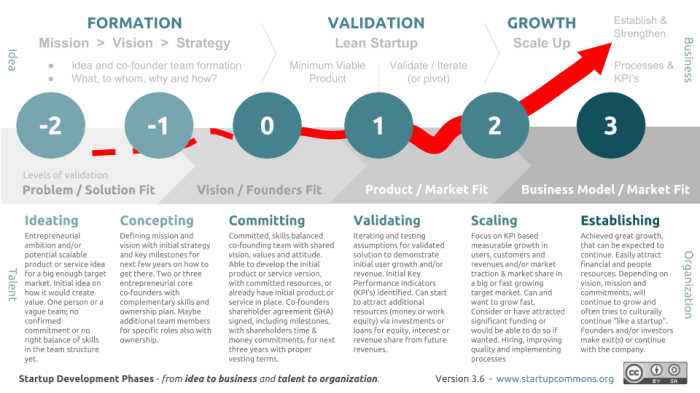
Navigating the dynamic landscape of startups requires a robust understanding of business development. This guide delves into the core principles and practical strategies crucial for early-stage companies seeking sustainable growth. From securing funding and forging strategic alliances to navigating ethical considerations and optimizing business travel, we explore the multifaceted nature of driving success in the competitive startup ecosystem.
We’ll examine various funding models, explore effective market entry strategies, and analyze the importance of strategic partnerships in achieving rapid scalability. The role of business coaching, ethical considerations, and the impact of business travel will also be examined, providing a holistic view of business development in the startup context. Ultimately, this guide aims to equip aspiring entrepreneurs with the knowledge and tools necessary to build thriving and impactful ventures.
Defining Business Development for Startups
Business development in a startup context is a multifaceted function crucial for sustainable growth. It goes beyond simply selling a product; it’s about strategically shaping the company’s future by identifying and pursuing opportunities that align with its long-term vision. This involves forging strategic partnerships, exploring new market segments, and securing funding – all aimed at maximizing the startup’s potential.Business development plays a pivotal role in a startup’s journey, acting as a bridge between the company’s internal capabilities and the external market landscape.
It’s about proactively seeking out and creating opportunities for growth, rather than reactively responding to market demands. This proactive approach is essential for startups navigating competitive landscapes and aiming for rapid scaling.
Core Functions of Business Development in Startups
The core functions of business development in a startup encompass a range of activities designed to foster growth and expansion. These activities are interconnected and often require collaboration across different departments within the company. A successful business development strategy requires a deep understanding of the market, the competitive landscape, and the startup’s unique value proposition.
- Strategic Partnerships: Identifying and forging alliances with complementary businesses to expand market reach, access new technologies, or share resources.
- Market Research and Analysis: Conducting thorough market research to identify potential target markets, assess competitive threats, and understand customer needs.
- New Business Opportunities: Exploring and evaluating new business opportunities, such as product diversification, expansion into new geographic markets, or development of new revenue streams.
- Funding Acquisition: Securing funding through various channels, including venture capital, angel investors, grants, and strategic partnerships.
- Mergers and Acquisitions: Evaluating and executing mergers and acquisitions to expand market share, gain access to new technologies, or eliminate competition.
Business Development vs. Sales and Marketing in Startups
While business development, sales, and marketing are all essential for startup success, they have distinct roles and responsibilities. Effective collaboration between these three functions is crucial for optimal performance. A clear understanding of their differences is vital for efficient resource allocation and strategic alignment.
| Function | Focus | Key Activities | Metrics |
|---|---|---|---|
| Business Development | Long-term strategic growth | Strategic partnerships, market research, funding acquisition | Number of strategic partnerships, market share expansion, funding secured |
| Sales | Short-term revenue generation | Lead generation, sales conversion, customer relationship management | Sales revenue, conversion rates, customer acquisition cost |
| Marketing | Brand building and lead generation | Branding, advertising, content marketing, social media marketing | Brand awareness, website traffic, lead generation, customer engagement |
Key Performance Indicators (KPIs) for Business Development in Startups
Measuring the success of business development initiatives requires a focus on key performance indicators (KPIs) that directly reflect the impact of these initiatives on the startup’s overall growth trajectory. These KPIs should be aligned with the startup’s overall strategic goals and regularly monitored to assess progress and make necessary adjustments.
- Number of Strategic Partnerships: Tracks the success in forging alliances with other businesses.
- Market Share Growth: Measures the increase in the startup’s share of the target market.
- Funding Secured: Quantifies the amount of funding acquired through various channels.
- New Market Entry Success Rate: Assesses the effectiveness of expanding into new geographic markets or customer segments.
- Return on Investment (ROI) of Business Development Initiatives: Measures the financial return generated by specific business development projects.
Hypothetical Business Development Plan for a Fictional Startup
Let’s consider “EcoGrow,” a startup developing sustainable vertical farming systems for urban environments. Their target markets are urban restaurants, grocery stores, and rooftop farming enthusiasts.
- Target Markets: Urban restaurants seeking fresh, locally sourced produce; grocery stores aiming to enhance their sustainability credentials; individuals and communities interested in rooftop gardening and urban farming.
- Strategies:
- Strategic Partnerships: Collaborate with urban farming organizations and sustainable food initiatives to expand reach and credibility.
- Marketing and Sales: Develop targeted marketing campaigns for each market segment, highlighting the economic and environmental benefits of EcoGrow’s systems.
- Funding Acquisition: Secure seed funding from angel investors and venture capitalists focused on sustainable technology.
- Product Development: Continuously improve the efficiency and scalability of the vertical farming systems based on market feedback.
Funding and Financial Strategies
Securing funding is crucial for startup business development. A well-defined financial strategy, encompassing various funding options and a robust financial model, significantly increases the chances of success. This section explores different funding avenues and the importance of financial projections in attracting investment.Funding options for startups pursuing business development initiatives are diverse, each with its own advantages and disadvantages.
Choosing the right path depends heavily on the startup’s stage, business model, and risk tolerance.
Funding Options for Startup Business Development
Startups have access to a range of funding sources to fuel their business development activities. These options vary considerably in terms of capital amounts, equity requirements, and the level of control relinquished by the founders.
- Angel Investors: High-net-worth individuals who invest their own capital in early-stage companies in exchange for equity. Angel investors often provide mentorship and industry connections in addition to funding. Their investment amounts are typically smaller than those of venture capitalists, but they can be crucial for initial growth.
- Venture Capitalists (VCs): Professional investors who manage funds from institutional investors and invest in high-growth potential companies. VCs typically invest larger sums than angel investors, but they demand a significant equity stake and expect a high return on investment. Their involvement often extends beyond financial support, including strategic guidance and network access.
- Small Business Loans: Loans offered by banks and other financial institutions specifically designed for small businesses. These loans require collateral and a detailed business plan, demonstrating the viability and repayment capacity of the business. While less dilutive than equity funding, interest payments can significantly impact profitability.
- Bootstrapping: This involves funding the business using personal savings, revenue generated from sales, or other internal resources. While this approach maintains complete control, it can limit growth potential due to restricted capital.
- Crowdfunding: Raising capital from a large number of individuals through online platforms. This approach can be effective for building brand awareness and generating early customer engagement, but it requires a strong marketing strategy and compelling value proposition.
Comparison of Funding Sources
A direct comparison highlights the key differences between angel investors, venture capitalists, and small business loans.
| Feature | Angel Investors | Venture Capitalists | Small Business Loans |
|---|---|---|---|
| Investment Amount | Smaller, typically ranging from $25,000 to $500,000 | Larger, often exceeding $1 million | Varies depending on lender and creditworthiness |
| Equity Stake | Moderate | Significant | None (debt financing) |
| Control | Minimal impact on operational control | Potentially significant influence | No impact on operational control |
| Return Expectations | High, but less demanding than VCs | Very high, seeking substantial returns | Moderate, based on interest rates |
| Mentorship | Often provides valuable mentorship and guidance | May offer guidance, but primary focus is on financial returns | No mentorship typically provided |
Importance of a Sound Financial Model
A robust financial model is essential for securing funding, regardless of the source. It provides potential investors with a clear picture of the startup’s financial projections, demonstrating its viability and potential for growth. This model should include detailed revenue projections, cost analysis, and key performance indicators (KPIs) that showcase the return on investment (ROI) expected from business development activities.
A poorly constructed model can deter investors, even if the underlying business idea is strong.
Simple Financial Projection Model and ROI of Business Development Investments
Let’s illustrate a simplified scenario. Suppose a startup invests $10,000 in business development activities (e.g., marketing, sales training) and projects a 20% increase in sales revenue within the next year. If current annual revenue is $50,000, the projected revenue increase is $10,000 ($50,000
0.20). The ROI is then calculated as follows
ROI = (Net Profit / Investment) – 100%
Assuming a net profit margin of 10% on the increased revenue, the net profit from the increased sales is $1,000 ($10,000
0.10). Therefore, the ROI is
ROI = ($1,000 / $10,000) – 100% = 10%
This simple example demonstrates that even a modest increase in sales revenue can yield a positive ROI on business development investments. A more comprehensive model would incorporate detailed cost breakdowns, different sales scenarios, and longer-term projections. However, this illustrates the fundamental principle of demonstrating the financial impact of business development efforts.
Strategic Partnerships and Alliances
Strategic partnerships are crucial for startups seeking rapid growth and market penetration. By leveraging the resources and expertise of established companies or other startups, a young company can overcome limitations in funding, technology, or market access, accelerating its path to success. Choosing the right partners, however, requires careful consideration and a clear understanding of mutual benefits.
Key Criteria for Selecting Strategic Partners
Selecting the right strategic partner is vital for a startup’s success. Several key criteria should guide this decision-making process. These criteria ensure compatibility, shared goals, and a synergistic relationship that maximizes the value proposition for both parties. Factors such as complementary strengths, shared values, and clear communication channels are paramount.
Ideal partners possess complementary capabilities that fill gaps in the startup’s existing resources. For instance, a startup developing innovative software might partner with a company specializing in sales and marketing to reach a wider audience. Shared values and a similar vision for the future are equally important to ensure long-term alignment and a productive working relationship. Finally, effective communication and a clear understanding of roles and responsibilities are essential to prevent misunderstandings and conflicts.
Examples of Successful Strategic Partnerships
Several successful startups have leveraged strategic partnerships to achieve remarkable growth. For example, Slack’s early partnerships with other workplace tools facilitated rapid user acquisition and market dominance. By integrating with existing workflows, Slack became an indispensable tool for businesses of all sizes. Similarly, early partnerships for Uber with various taxi companies helped them gain a foothold in many cities before fully establishing their own driver network.
These examples demonstrate the power of strategic alliances in accelerating growth and achieving market leadership.
Case Study: Spotify and Facebook
Spotify’s partnership with Facebook, where Spotify integration was directly within the Facebook app, presents a compelling case study. This partnership benefited Spotify by exposing its service to a massive user base and driving user acquisition. Facebook gained by offering a valuable service to its users, increasing engagement and potentially generating advertising revenue. However, the partnership also presented challenges. Integrating two complex platforms required significant technical expertise and coordination, and negotiating the terms of the partnership, particularly regarding data sharing and revenue sharing, likely involved extensive negotiations.
Comparison of Partnership Models
Different partnership models offer varying levels of commitment and control. Choosing the right model depends on the specific needs and goals of the startup and its partner.
| Partnership Model | Pros | Cons | Suitable for |
|---|---|---|---|
| Joint Venture | Shared resources, risk, and reward; increased market access; enhanced brand recognition. | Complex legal structure; potential for conflicts; requires significant investment and commitment. | Startups seeking rapid expansion into new markets or developing complex products. |
| Licensing Agreement | Access to intellectual property; reduced development costs; limited risk. | Limited control over the product; potential for royalty disputes; dependence on the licensee. | Startups with valuable intellectual property seeking to expand their market reach without significant investment. |
| Strategic Alliance | Flexibility; shared resources and expertise; enhanced market positioning. | Limited control; potential for conflicts; requires careful management. | Startups seeking to access specific resources or expertise without significant capital investment. |
| Affiliate Marketing | Increased brand awareness; cost-effective customer acquisition; scalable reach. | Dependence on affiliate partners; potential for fraud; difficult to track performance. | Startups with strong online presence and attractive products or services. |
Market Entry and Expansion Strategies
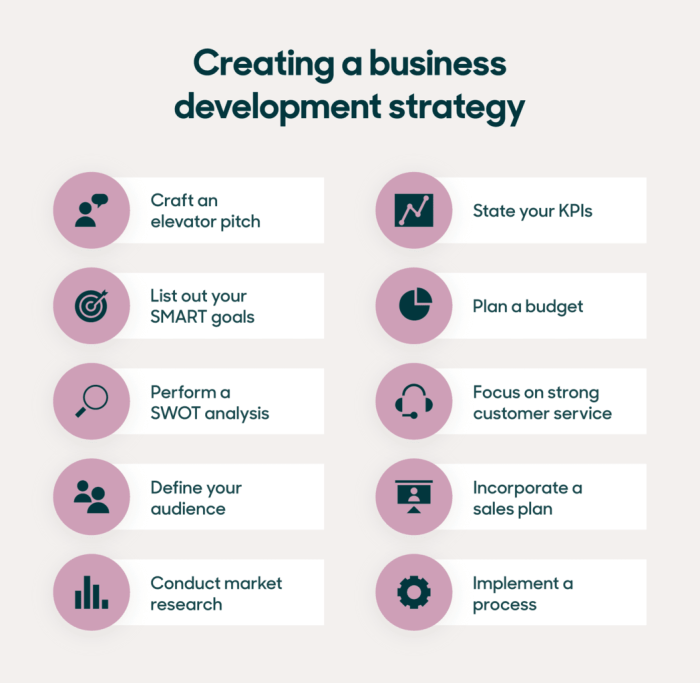
Successfully launching and growing a startup hinges on a well-defined market entry and expansion strategy. Choosing the right approach depends heavily on factors like the startup’s resources, the nature of its product or service, and the characteristics of the target market. A poorly planned entry can lead to wasted resources and missed opportunities, while a strategic approach can significantly increase the chances of success.Market entry strategies determine how a startup initially enters a market, while expansion strategies Artikel how it grows within that market or into new ones.
Both require careful consideration and planning to maximize impact and minimize risk. A phased approach, starting with a limited entry and gradually scaling operations, is often a prudent strategy for startups with limited resources.
Market Entry Strategies for Startups
Several key market entry strategies exist, each with its own advantages and disadvantages. The optimal choice depends on the specific circumstances of the startup.
- Direct Sales: This involves establishing a direct sales force to reach customers. It offers high control and allows for deep customer relationships but requires significant upfront investment and a robust sales infrastructure.
- Channel Partnerships: This strategy leverages existing distribution channels, such as wholesalers, retailers, or online marketplaces. It reduces the startup’s investment in sales and distribution but may limit control over pricing and marketing.
- Franchising: This involves licensing the business model to independent operators. It allows for rapid expansion with minimal capital investment but requires careful selection and management of franchisees.
Market Expansion Strategies for Startups
Once a startup has established a foothold in a market, it can pursue various expansion strategies to grow its reach and revenue.
- Geographic Expansion: This involves entering new geographic markets, either domestically or internationally. This might involve replicating the existing business model in a new location or adapting it to the specific needs of the new market. For example, a successful coffee shop in a college town might expand to other college towns or even adapt its menu to appeal to a different demographic in a suburban area.
- Product Diversification: This involves expanding the product or service offerings to cater to a wider range of customer needs or to enter new market segments. A company initially selling only running shoes might diversify into other athletic apparel or accessories.
The Importance of Market Research in Informing Business Development Strategies
Thorough market research is crucial for developing effective market entry and expansion strategies. It provides valuable insights into customer needs, preferences, and buying behavior; identifies competitors and their strategies; and helps assess the overall market potential. Without robust market research, startups risk developing products or services that fail to meet market demand or entering markets that are already saturated or unsuitable.
For example, a market research study might reveal a high demand for eco-friendly cleaning products in a specific region, guiding a startup to focus its efforts there.
Market Entry Plan: A Vegan Food Delivery Service
Let’s consider a vegan food delivery service targeting young professionals in a major metropolitan area. Target Audience: Young professionals (25-40 years old) living in urban areas, health-conscious, environmentally aware, and with busy lifestyles. Competitive Landscape: Existing food delivery services with limited vegan options; independent vegan restaurants with limited delivery reach. Marketing Approach: Digital marketing (social media, targeted advertising), partnerships with local vegan influencers, and collaborations with health and wellness organizations.
Emphasis on convenience, healthy options, and sustainable practices. A strong online presence with user-friendly ordering and delivery tracking is essential. Initial focus on a limited menu and delivery area to minimize operational complexity and maximize efficiency. The service will emphasize rapid delivery times and competitive pricing, appealing to the target audience’s busy lifestyle. A loyalty program could be implemented to retain customers and encourage repeat orders.
Business Development and Ethics
Building a successful startup requires more than just a great product and a solid business plan; it demands unwavering ethical conduct. In the fast-paced world of business development, maintaining integrity is crucial for long-term sustainability and building trust with customers, partners, and investors. Ethical lapses can severely damage a company’s reputation and even lead to legal repercussions. This section explores the ethical considerations vital for navigating the complexities of startup business development.Ethical considerations in business development revolve around transparency and fair competition.
Transparency fosters trust and accountability, while fair competition ensures a level playing field for all market participants. Both are essential for building a sustainable and reputable business. A lack of either can lead to significant short-term gains but ultimately erode long-term success.
Unethical Business Practices and Consequences
Examples of unethical business practices include misrepresenting product capabilities, engaging in deceptive marketing, stealing intellectual property, exploiting loopholes in regulations, and using unfair competitive tactics like price-fixing or spreading false rumors about competitors. The consequences can range from reputational damage and loss of investor confidence to hefty fines, lawsuits, and even criminal charges. For instance, a startup falsely claiming its software is compatible with a particular operating system could face legal action and a significant loss of credibility.
Similarly, a company engaging in price-fixing with a competitor could face substantial antitrust penalties.
Best Practices for Maintaining Ethical Standards
Maintaining ethical standards requires a proactive and comprehensive approach. This includes establishing a clear code of conduct, providing regular ethics training to employees, implementing robust internal controls, and fostering a culture of ethical decision-making. Regular audits of business practices and open communication channels for reporting ethical concerns are also crucial. Furthermore, seeking external advice from ethical consultants or legal counsel can provide valuable insights and guidance.
A commitment to transparency in all business dealings, from marketing to partnerships, builds trust and reinforces ethical conduct.
Code of Conduct for Business Development Professionals
A sample code of conduct for business development professionals in a startup environment might include the following principles:
- Act with honesty and integrity in all business dealings.
- Respect intellectual property rights and avoid plagiarism or unauthorized use of confidential information.
- Engage in fair competition and avoid any anti-competitive practices.
- Maintain transparency in all communications and interactions with customers, partners, and investors.
- Comply with all applicable laws and regulations.
- Protect the privacy and confidentiality of customer and business information.
- Report any suspected ethical violations promptly and appropriately.
- Uphold the reputation and integrity of the company and its stakeholders.
This code serves as a framework and should be tailored to reflect the specific needs and context of the startup. Regular review and updates are crucial to ensure its continued relevance and effectiveness.
The Role of Business Coaching
Navigating the complexities of startup life can be challenging, and securing expert guidance is often crucial for success. Business coaching provides that invaluable support, acting as a catalyst for growth and helping startups overcome hurdles in their business development journey. A skilled coach offers a fresh perspective, identifies blind spots, and helps entrepreneurs refine their strategies for sustainable expansion.The value of business coaching for startups, particularly in business development, is multifaceted.
Coaches provide tailored support, helping entrepreneurs develop critical skills, refine their vision, and achieve their goals more efficiently. This tailored approach addresses the unique challenges faced by startups, offering a personalized roadmap for success. They can help startups avoid common pitfalls, improve decision-making, and accelerate their growth trajectory. This leads to increased profitability, improved market positioning, and a stronger overall business foundation.
Key Skills and Qualities of an Effective Business Coach for Startups
Effective business coaching for startups requires a specific skillset and a set of crucial personal qualities. Coaches must possess a deep understanding of the startup ecosystem, including the challenges of fundraising, market entry, and scaling operations. Beyond technical expertise, effective coaches need strong interpersonal skills to build rapport and trust with their clients. This trust forms the foundation for open communication and honest feedback, which are essential for meaningful progress.
Furthermore, a coach’s ability to actively listen, provide constructive criticism, and inspire action is paramount. An effective coach acts as a mentor, advisor, and accountability partner, all rolled into one. Their ability to adapt their coaching style to the unique needs and personality of each client is also crucial for success.
Different Business Coaching Methodologies
Several methodologies underpin effective business coaching. One common approach is the GROW model, focusing on Goal setting, Reality assessment, Options exploration, and Will (commitment). This structured approach provides a framework for identifying objectives, analyzing the current situation, brainstorming potential solutions, and committing to action. Another approach is the Strengths-Based Coaching methodology, which focuses on leveraging the client’s inherent strengths to overcome challenges.
This positive psychology approach empowers entrepreneurs by highlighting their capabilities and building confidence. Conversely, some coaches adopt a more directive approach, providing specific guidance and recommendations. The choice of methodology depends on the coach’s experience, the client’s needs, and the specific challenges faced by the startup. The most effective coaches are often adaptable, drawing on different methodologies to create a personalized coaching plan.
Hypothetical Coaching Scenario
Imagine a tech startup struggling with customer acquisition. Their initial marketing strategy has yielded disappointing results, and they are running low on funds. A business coach, using a combination of the GROW model and Strengths-Based Coaching, begins by helping the founders define specific, measurable, achievable, relevant, and time-bound (SMART) goals for customer acquisition. They then assess the current reality, analyzing the strengths and weaknesses of the existing marketing strategy.
Through collaborative brainstorming, they explore various options, such as refining the target market, experimenting with different marketing channels (e.g., content marketing, social media advertising), and optimizing their website for conversions. Finally, the coach helps the founders create an action plan, setting clear timelines and assigning responsibilities. Regular check-ins ensure accountability and allow for adjustments based on progress and emerging challenges.
This structured approach, combined with the coach’s support and guidance, helps the startup overcome its customer acquisition hurdle and achieve sustainable growth.
Business Models and Strategies
Choosing the right business model is crucial for a startup’s success. It dictates how a company creates, delivers, and captures value. A well-defined model provides a clear roadmap for operations, attracting both customers and investors. Understanding the nuances of various models is key to building a sustainable and profitable venture.
Comparison of Business Models
Different business models cater to different needs and markets. Subscription models, for instance, offer recurring revenue through ongoing customer commitments. Freemium models entice users with a free basic service, upselling to premium features. Transactional models, on the other hand, focus on individual sales with no ongoing relationship. Each model presents unique advantages and disadvantages regarding customer acquisition, retention, and revenue predictability.
For example, subscription models offer predictable revenue but require high customer retention rates, while transactional models rely on consistent high sales volumes.
Examples of Successful Business Model Implementation
Several startups have demonstrated the effectiveness of diverse business models. Spotify, with its freemium model, successfully built a massive user base through a free tier while generating substantial revenue from premium subscriptions. Salesforce, utilizing a subscription-based Software as a Service (SaaS) model, achieved significant growth and market dominance through recurring revenue streams. Conversely, companies like Shopify leverage a transactional model, profiting from each individual sale of their e-commerce platform.
These examples highlight the adaptability and potential of different approaches depending on the product, market, and overall business strategy.
Importance of a Well-Defined Business Model for Investors
A clear business model is paramount when seeking investment. It demonstrates a deep understanding of the market, target audience, and revenue generation strategy. Investors want to see a viable path to profitability, and a well-articulated business model provides that assurance. A poorly defined or unrealistic model, conversely, raises significant red flags, indicating a lack of planning and potentially higher risk.
A strong business model reduces investor uncertainty and increases the likelihood of securing funding.
Business Model Canvas for a Fictional Startup
Let’s consider “EcoGrow,” a startup providing sustainable hydroponic gardening kits.
| Building Block | Description |
|---|---|
| Customer Segments | Urban dwellers, environmentally conscious consumers, beginners in gardening. |
| Value Propositions | Easy-to-use hydroponic kits, sustainable and space-saving gardening, fresh produce at home. |
| Channels | Direct-to-consumer website, partnerships with eco-friendly retailers, online marketing. |
| Customer Relationships | Online support, community forum, personalized email communication. |
| Revenue Streams | Sales of hydroponic kits, subscription service for nutrient refills, educational workshops. |
| Key Activities | Kit assembly, online marketing, customer support, content creation. |
| Key Resources | Hydroponic growing system designs, online platform, skilled workforce, supplier network. |
| Key Partnerships | Suppliers of hydroponic components, eco-friendly packaging companies, gardening influencers. |
| Cost Structure | Material costs, manufacturing, marketing, salaries, online platform maintenance. |
Business Travel and its Impact
For startups, particularly those operating in competitive markets or seeking to expand their reach, business travel plays a crucial role in driving business development. It facilitates direct engagement with potential clients, investors, and partners, fostering relationships that are difficult to build remotely. The impact extends beyond immediate sales; it builds brand awareness, cultivates trust, and accelerates the overall growth trajectory.Business travel, however, is a significant expense for startups often operating on tight budgets.
Careful planning and execution are essential to maximize return on investment while minimizing financial strain. Understanding the associated costs and implementing effective cost-optimization strategies is critical for sustainable growth.
Costs Associated with Business Travel and Cost Optimization Strategies
The costs of business travel encompass airfare, accommodation, ground transportation, meals, and incidentals. For startups, these expenses can quickly escalate, particularly with multiple team members traveling frequently. Effective cost optimization involves leveraging budget airlines, booking accommodations in advance to secure lower rates, utilizing public transport whenever feasible, and opting for cost-effective meal options. Negotiating corporate rates with hotels and airlines can also yield significant savings.
Tracking expenses meticulously and utilizing expense management software can improve budgeting and identify areas for potential savings. Prioritizing trips based on potential ROI and consolidating travel whenever possible further contributes to cost efficiency. For instance, a startup might schedule meetings with multiple potential clients in a single city to minimize travel frequency and associated costs.
Effective Business Travel Strategies for Networking and Relationship Building
Business travel presents invaluable opportunities for networking and relationship building. Strategic planning is key to maximizing these opportunities. This includes identifying relevant industry events, conferences, and trade shows to attend. Actively engaging with attendees, exchanging business cards, and following up with meaningful connections are crucial. Prior to the trip, research potential contacts and schedule meetings in advance.
During travel, leverage downtime to network informally, attending social events and engaging in casual conversations. Following up post-travel with personalized emails or calls reinforces the connections made and demonstrates genuine interest. For example, a startup attending a tech conference could strategically target investors known to fund companies in their sector, pre-scheduling meetings and networking during breaks and social events to build relationships and secure potential funding.
Tips for Maximizing the Effectiveness of Business Trips for Startups
Effective business travel requires meticulous planning and execution. The following tips can significantly improve the ROI of each trip:
- Clearly define objectives before each trip: What specific goals need to be achieved? This ensures focused efforts and measurable outcomes.
- Prioritize meetings and networking events based on potential impact: Focus on high-value interactions to maximize return on investment.
- Prepare thoroughly before each trip: Research potential clients, partners, and investors. Develop clear agendas and talking points for each meeting.
- Leverage technology to enhance communication and collaboration: Utilize video conferencing and other tools to minimize unnecessary travel.
- Track and analyze the results of each trip: Assess the success of meetings and networking events, identifying areas for improvement in future trips.
- Document all expenses meticulously: This facilitates accurate budgeting and reporting, ensuring accountability and transparency.
Successfully navigating the challenges and opportunities inherent in startup business development requires a multifaceted approach. By strategically leveraging funding options, cultivating strong partnerships, implementing effective market entry strategies, and adhering to ethical best practices, startups can significantly increase their chances of success. This comprehensive overview has provided a framework for understanding the key components of business development, empowering entrepreneurs to build sustainable and thriving businesses.
Remember that continuous learning, adaptation, and a commitment to ethical practices are vital for long-term growth and success in this dynamic environment.
Commonly Asked Questions
What is the difference between business development and sales?
Sales focuses on closing deals and generating immediate revenue. Business development focuses on long-term growth strategies, including building relationships, identifying new opportunities, and expanding market reach.
How can a startup measure the success of its business development efforts?
Key performance indicators (KPIs) can include number of strategic partnerships secured, new market penetration, increase in brand awareness, and pipeline growth.
What are some common ethical pitfalls to avoid in startup business development?
Misrepresenting capabilities, engaging in unfair competition, and violating intellectual property rights are examples of unethical practices to avoid.
How important is market research in business development?
Market research is crucial for identifying target markets, understanding customer needs, and developing effective strategies. It informs all aspects of business development, from product development to marketing and sales.


