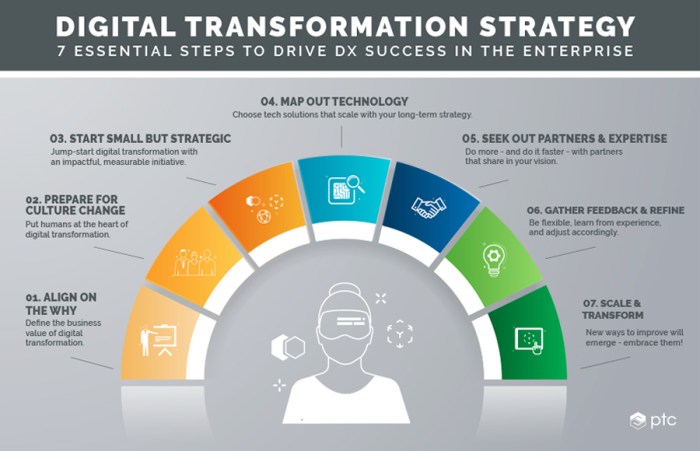
Digital transformation is reshaping the business landscape, compelling organizations to adapt and innovate to remain competitive. This exploration delves into the synergistic relationship between digital transformation and business development, examining how leveraging technology enhances growth, efficiency, and market reach. We’ll traverse the strategic implementation of digital tools, ethical considerations, and the crucial role of business coaching in navigating this evolving terrain.
From defining core components and analyzing diverse industry applications to outlining practical strategies for SMEs and exploring innovative funding models, this comprehensive overview provides a framework for understanding and successfully implementing digital transformation initiatives. The discussion also addresses the ethical implications of data usage, the changing dynamics of business travel, and the development of robust, future-proof business strategies.
Defining Digital Transformation in Business Development
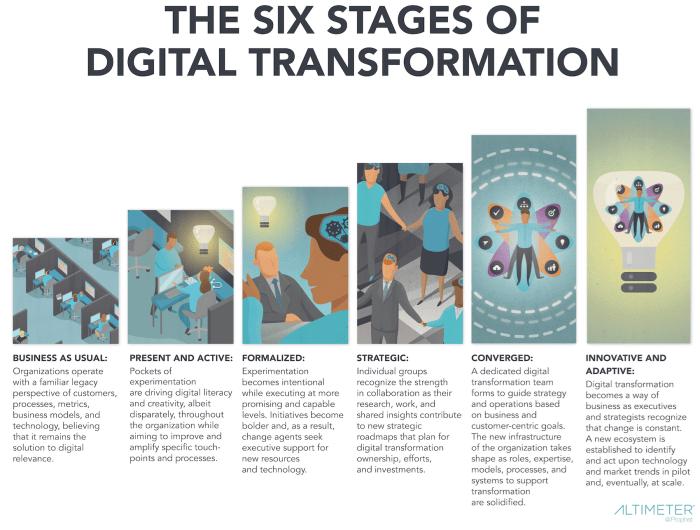
Digital transformation in business development is the process of using digital technologies to fundamentally change how a business operates, interacts with customers, and creates value. It’s not just about adopting new technologies; it’s about reimagining business models and processes to leverage the full potential of the digital landscape. This transformation impacts every aspect of a business, from marketing and sales to operations and customer service.Digital transformation fundamentally alters a company’s approach to business development, creating new opportunities for growth and efficiency.
Core components include data analytics, which provides insights into customer behavior and market trends; cloud computing, enabling scalability and flexibility; automation, streamlining processes and reducing manual tasks; and e-commerce, opening up new sales channels and reaching wider audiences. The impact on business growth is multifaceted, leading to increased efficiency, improved customer experience, enhanced innovation, and ultimately, higher profitability.
Digital Transformation Strategies Across Industries
Digital transformation strategies vary significantly across industries due to differing business models, customer expectations, and regulatory environments. For example, a manufacturing company might focus on implementing IoT sensors to optimize production processes and predict equipment failures, while a financial institution might prioritize cybersecurity and data analytics to enhance fraud detection and personalized customer services. Retail businesses often invest heavily in e-commerce platforms and personalized marketing, whereas healthcare providers might concentrate on electronic health records (EHR) systems and telehealth platforms.
The common thread is the need to adapt and innovate using digital tools to remain competitive.
Examples of Successful Digital Transformation Initiatives
Many companies have successfully implemented digital transformation initiatives with measurable outcomes. Netflix’s shift from DVD rentals to a streaming service is a prime example. This transformation dramatically increased their reach, customer base, and revenue streams. Similarly, Domino’s Pizza’s investment in online ordering and mobile apps significantly boosted convenience for customers and streamlined operations, resulting in increased sales and market share.
These successful transformations involved a comprehensive approach encompassing technology adoption, process re-engineering, and a strong focus on customer experience.
Hypothetical Digital Transformation Plan for an SME in the Food Industry
Let’s consider a small-to-medium-sized enterprise (SME) in the food industry, a local bakery, for instance. A digital transformation plan for this business could include:
- Developing an e-commerce website: This allows customers to order online for pickup or delivery, expanding reach beyond the physical store.
- Implementing a customer relationship management (CRM) system: This enables the bakery to track customer preferences, manage loyalty programs, and personalize marketing efforts.
- Utilizing social media marketing: Creating engaging content and running targeted advertising campaigns on platforms like Instagram and Facebook can increase brand awareness and drive sales.
- Adopting inventory management software: This helps optimize stock levels, reducing waste and ensuring sufficient supply to meet demand.
- Implementing a point-of-sale (POS) system: This streamlines transactions, improves accuracy, and provides valuable data on sales trends.
This plan focuses on enhancing customer experience, improving operational efficiency, and expanding market reach, all key aspects of a successful digital transformation. The measurable outcomes would include increased online orders, improved customer retention rates, reduced inventory costs, and enhanced data-driven decision-making. The bakery could track key performance indicators (KPIs) such as website traffic, conversion rates, and customer satisfaction scores to measure the success of the transformation.
Business Development Strategies Leveraging Digital Technologies
The integration of digital technologies has fundamentally reshaped the landscape of business development, offering unprecedented opportunities for growth and efficiency. Traditional methods, while still holding value, are increasingly complemented and often superseded by the speed, scalability, and data-driven insights offered by digital approaches. This shift necessitates a strategic understanding of how to effectively leverage these technologies to achieve business development goals.
Traditional vs. Modern Business Development Methods
Traditional business development relied heavily on in-person networking, print advertising, direct mail campaigns, and cold calling. These methods, while effective in building personal relationships, often suffered from limitations in reach, measurability, and cost-effectiveness. Modern digital approaches, conversely, leverage online channels, data analytics, and automation to reach wider audiences, personalize interactions, and track performance with greater precision. For instance, a traditional sales team might spend considerable time traveling to meet potential clients, whereas a digital strategy could utilize video conferencing, online demos, and targeted advertising to achieve similar results with increased efficiency and reduced costs.
The key difference lies in the shift from broad, generic outreach to highly targeted, personalized engagement facilitated by data and technology.
Key Digital Tools and Platforms Enhancing Business Development
Several digital tools and platforms significantly enhance business development efforts. Customer Relationship Management (CRM) systems, such as Salesforce or HubSpot, centralize customer data, automate communication workflows, and provide valuable insights into customer behavior. Marketing automation platforms, like Marketo or Pardot, automate marketing tasks, enabling personalized email campaigns, lead nurturing, and social media engagement. Social media platforms like LinkedIn, Twitter, and Facebook provide avenues for direct engagement with potential clients and industry influencers.
Finally, project management tools like Asana or Trello help streamline collaboration and track progress on business development initiatives. Effective utilization of these platforms allows for better organization, improved communication, and a more data-driven approach to strategy.
Data Analytics in Optimizing Business Development Strategies
Data analytics plays a crucial role in optimizing business development strategies. By analyzing website traffic, social media engagement, customer interactions, and sales data, businesses can gain valuable insights into customer preferences, market trends, and the effectiveness of their strategies. For example, analyzing website analytics can reveal which marketing channels are driving the most qualified leads, allowing businesses to allocate resources more effectively.
Similarly, analyzing customer data can help identify high-value customers and tailor engagement strategies accordingly. This data-driven approach allows for continuous improvement and optimization, ensuring that business development efforts are aligned with actual market demands and customer behavior. Consider a company using Google Analytics to track website conversions; by analyzing the data, they might discover that a specific landing page is underperforming and requires redesign or a different advertising approach.
Implementing a Digital Marketing Campaign for Increased Lead Generation
A successful digital marketing campaign for lead generation requires a structured approach.
- Define Target Audience: Thoroughly research and define the ideal customer profile, including demographics, interests, and online behavior.
- Set Clear Goals and KPIs: Establish measurable goals, such as website traffic, lead generation, and conversion rates, and track Key Performance Indicators (KPIs) to measure success.
- Develop a Content Strategy: Create high-quality, relevant content that resonates with the target audience and addresses their needs. This includes blog posts, articles, infographics, videos, and social media updates.
- Choose the Right Channels: Select the most effective digital marketing channels based on the target audience and campaign goals. This could include search engine optimization (), pay-per-click (PPC) advertising, social media marketing, and email marketing.
- Implement and Monitor: Launch the campaign and closely monitor its performance, tracking KPIs and making adjustments as needed. A/B testing different elements of the campaign, such as headlines, calls-to-action, and landing pages, is crucial for optimization.
- Analyze and Optimize: Regularly analyze the campaign data to identify areas for improvement and optimize the strategy for better results. This iterative process ensures continuous improvement and maximum return on investment.
For example, a B2B SaaS company might use LinkedIn advertising to target professionals in specific industries, creating engaging content about the benefits of their software. By tracking clicks, lead generation, and conversion rates, they can refine their targeting and messaging to improve campaign performance.
The Role of Business Ethics in Digital Transformation
Digital transformation, while offering immense opportunities for growth and efficiency, presents significant ethical challenges. The vast amounts of data collected and utilized necessitate a robust ethical framework to ensure responsible and transparent operations. Ignoring these ethical considerations can lead to reputational damage, legal repercussions, and a loss of customer trust. A proactive approach to ethical considerations is crucial for long-term sustainability and success in the digital age.
Data Collection and Usage: Ethical Considerations
The collection and use of customer data are central to many digital transformation initiatives. However, this data must be handled responsibly, respecting individual privacy and adhering to relevant regulations like GDPR and CCPA. Ethical concerns arise around the transparency of data collection practices, the purpose for which data is used, and the security measures in place to protect it.
Companies must be upfront about what data they collect, how they use it, and with whom they share it. This includes obtaining explicit consent for data processing and providing clear mechanisms for users to access, correct, or delete their data. Failing to do so can lead to serious breaches of trust and legal consequences.
Maintaining Transparency and Accountability in Digital Business Operations
Transparency and accountability are paramount in building and maintaining customer trust. Companies undergoing digital transformation should clearly articulate their data privacy policies, security protocols, and ethical guidelines. Regular audits and independent assessments can help ensure compliance and identify potential vulnerabilities. Furthermore, establishing clear channels for customer feedback and grievance redressal is vital. This allows customers to voice concerns and ensures that issues are addressed promptly and fairly.
Proactive communication about data breaches, even minor ones, demonstrates a commitment to transparency and builds confidence. Examples of best practices include publishing annual transparency reports detailing data usage and security measures and establishing an independent ethics committee to oversee digital operations.
Ethical Dilemmas in Digital Transformation and Proposed Solutions
Several ethical dilemmas arise during digital transformation. One example is the use of AI-powered decision-making systems, which can perpetuate existing biases present in the data they are trained on. This can lead to unfair or discriminatory outcomes, for example, in loan applications or hiring processes. The solution lies in carefully auditing the data used to train AI systems, mitigating biases, and implementing human oversight to ensure fairness and accountability.
Another dilemma involves the use of customer data for targeted advertising. While personalized advertising can enhance user experience, it can also raise concerns about privacy invasion and manipulation. Solutions include providing users with greater control over their data and offering opt-out options for personalized advertising. A further challenge is the ethical implications of using facial recognition technology, which can raise concerns about surveillance and potential misuse.
Careful consideration of the potential impact on privacy and civil liberties is essential, alongside clear guidelines and regulations on its use.
A Code of Conduct for a Digitally Transforming Company
A comprehensive code of conduct is crucial for guiding ethical decision-making within a digitally transforming company. This code should explicitly address data privacy, security, and transparency.
Data shall be collected only with the informed consent of the individual, and used solely for the purposes specified at the time of collection. All data shall be stored securely and protected against unauthorized access or disclosure. Regular audits will be conducted to ensure compliance with this code. We will strive for maximum transparency regarding our data handling practices.
The code should also cover the responsible use of AI and other emerging technologies, emphasizing fairness, accountability, and human oversight. Regular training for employees on the code of conduct and its implications is vital to ensure its effectiveness. Furthermore, mechanisms for reporting ethical violations and addressing concerns should be established and readily accessible to all employees. The company should also commit to actively engaging with stakeholders, including customers and regulators, to ensure that its digital transformation is conducted ethically and responsibly.
Business Coaching in a Digitally Transformed Environment
Business coaching is undergoing a significant evolution to effectively support organizations navigating the complexities of digital transformation. The traditional coaching model needs adaptation to address the unique challenges and opportunities presented by technological advancements and changing business landscapes. A digitally savvy coach plays a crucial role in guiding businesses towards successful digital adoption and integration.The adaptation of business coaching to support digital transformation initiatives requires a multifaceted approach.
Coaches must understand the technological landscape, the implications of digital strategies on business operations, and the change management processes required for successful implementation. They act as facilitators, helping leadership teams define their digital vision, develop strategic roadmaps, and overcome resistance to change. Moreover, they provide ongoing support and accountability, ensuring that the transformation stays on track and delivers the desired results.
Skills and Knowledge Required for Effective Digital Transformation Coaching
Effective coaching in a digitally transformed environment demands a specific skill set. Coaches need a strong understanding of digital technologies, including cloud computing, data analytics, artificial intelligence, and cybersecurity. They must also be proficient in change management methodologies, able to navigate organizational politics, and possess strong communication and interpersonal skills. Furthermore, they need to be adept at identifying and analyzing data to inform their coaching strategies and measure the success of transformation initiatives.
Crucially, they need to be able to translate complex technical concepts into easily understandable language for business leaders who may not have a technical background.
Coaching Approaches for Different Levels of Digital Maturity
The coaching approach should be tailored to the organization’s level of digital maturity. Organizations at a nascent stage of digital transformation may require coaching focused on developing a digital vision, building a business case for digital investment, and establishing a digital transformation roadmap. These initial coaching sessions would focus on education, strategic planning, and risk assessment. Conversely, organizations with a more advanced level of digital maturity may need coaching that focuses on optimizing existing digital capabilities, driving innovation through technology, and fostering a culture of continuous improvement.
This would involve coaching on advanced analytics, digital strategy refinement, and organizational agility. A mature organization might require coaching focused on leveraging emerging technologies like AI and blockchain for competitive advantage.
Sample Coaching Session Plan: Overcoming Challenges During Digital Adoption
This sample coaching session plan focuses on addressing common challenges encountered during digital adoption.
| Session Stage | Activity | Objective |
|---|---|---|
| Assessment | Identify specific challenges hindering digital adoption through interviews and data analysis. This includes understanding resistance from employees, technological hurdles, and budget constraints. | Gain a clear understanding of the client’s current situation and the specific challenges they are facing. |
| Goal Setting | Collaboratively define SMART (Specific, Measurable, Achievable, Relevant, Time-bound) goals for overcoming identified challenges. Examples might include increasing employee engagement with new software or reducing the time it takes to complete a process. | Establish clear, achievable goals that provide a framework for the coaching process. |
| Strategy Development | Develop a detailed action plan with specific steps, timelines, and responsibilities for each goal. This might involve training programs for employees, process re-engineering, or the procurement of new technology. | Create a roadmap for overcoming the identified challenges and achieving the defined goals. |
| Implementation & Monitoring | Implement the action plan and regularly monitor progress against established goals. This involves tracking key performance indicators (KPIs) and making adjustments as needed. | Ensure the action plan is effectively implemented and track progress towards achieving the goals. |
| Evaluation & Adjustment | Evaluate the overall success of the digital adoption initiative and make adjustments to the strategy as necessary. This might involve refining processes, addressing unforeseen challenges, or adjusting goals. | Ensure the initiative remains on track and achieves the desired outcomes. |
Securing Funding for Digital Transformation
Securing funding for digital transformation initiatives is crucial for successful implementation. Businesses often need external financing to cover the costs of new technologies, software, training, and consulting services. Understanding the various funding options and the criteria lenders use is essential for a strong application. This section explores different business loan types, lender evaluation criteria, suitable business models for a digitally transformed environment, and a sample financial model to illustrate ROI.
Types of Business Loans for Digital Transformation
Several loan types can fund digital transformation projects. These vary in terms of interest rates, repayment schedules, and eligibility criteria. The best choice depends on the business’s specific needs and financial situation.
- Term Loans: These are fixed-amount loans repaid over a specific period with regular installments. They’re suitable for large, predictable expenses like software implementation or equipment purchases.
- Lines of Credit: This provides access to a pre-approved amount of funds, which can be drawn upon as needed. This flexibility is beneficial for projects with fluctuating costs.
- Equipment Financing: This specifically finances the purchase of equipment crucial for digital transformation, such as servers, networking hardware, or 3D printers. Repayment is often tied to the equipment’s value.
- Small Business Administration (SBA) Loans: Backed by the U.S. government, these loans offer favorable terms and lower interest rates for small businesses, often requiring less stringent collateral requirements.
Lender Evaluation Criteria for Digital Transformation Projects
Lenders assess several factors when considering loan applications for digital transformation. A strong application demonstrates a clear understanding of the project’s potential and the business’s ability to repay the loan.
- Project Justification and ROI: Lenders need a convincing business case outlining the project’s objectives, expected benefits (increased efficiency, revenue growth, cost savings), and a realistic ROI calculation.
- Financial Health of the Business: Credit history, cash flow, profitability, and debt-to-equity ratio are crucial indicators of the business’s ability to manage debt.
- Management Team’s Experience: Lenders assess the management team’s experience and expertise in executing similar projects and adapting to technological change.
- Market Analysis and Competition: A strong market analysis demonstrating the project’s alignment with market trends and competitive advantages increases the likelihood of approval.
- Collateral: Lenders may require collateral, such as assets or property, to secure the loan, reducing their risk.
Business Models Suitable for a Digitally Transformed Landscape
Digital transformation opens opportunities for new and adapted business models. The choice depends on the industry, target market, and business goals.
- Subscription-based Models: Recurring revenue streams provide stability and predictability, particularly attractive to lenders. Examples include software-as-a-service (SaaS) or subscription boxes.
- Platform Businesses: Creating a platform connecting buyers and sellers (e.g., marketplaces, app stores) can generate significant revenue and scalability.
- Data-driven Businesses: Leveraging data analytics to personalize customer experiences, optimize operations, and develop new products or services can lead to competitive advantages.
- Direct-to-Consumer (DTC) Models: Bypassing intermediaries and selling directly to consumers, businesses can improve margins and build stronger customer relationships.
Financial Model Demonstrating ROI of a Digital Transformation Project
Let’s consider a hypothetical example: a small retail business implementing a new e-commerce platform.
| Item | Year 1 | Year 2 | Year 3 |
|---|---|---|---|
| Initial Investment (Website Development, Software) | $10,000 | ||
| Annual Operating Costs (Hosting, Maintenance) | $2,000 | $2,000 | $2,000 |
| Increased Sales Revenue | $5,000 | $10,000 | $15,000 |
| Reduced Operational Costs (e.g., reduced staffing) | $1,000 | $1,000 | $1,000 |
| Net Profit (Increased Revenue – Operating Costs) | $4,000 | $9,000 | $14,000 |
Cumulative Net Profit after 3 years: $27,
000. ROI
($27,000 – $10,000) / $10,000 = 170%
This simplified model illustrates a positive ROI. A more comprehensive model would incorporate factors like customer acquisition costs, marketing expenses, and potential risks. However, it demonstrates the potential for a significant return on investment from a digital transformation project.
Developing a Robust Business Strategy for Digital Transformation
A successful digital transformation isn’t simply about adopting new technologies; it requires a meticulously planned and executed business strategy. This strategy must align technological advancements with overarching business objectives, ensuring a cohesive and impactful transformation. Ignoring strategic planning can lead to wasted resources and a failure to achieve desired outcomes. A robust strategy considers potential challenges and incorporates mitigation plans, maximizing the return on investment and minimizing disruption.
A comprehensive business strategy for digital transformation integrates several key elements. It begins with a thorough assessment of the current business landscape, identifying areas where digital technologies can enhance efficiency, productivity, and customer engagement. This assessment should also pinpoint existing technological capabilities and infrastructure, forming the foundation for future development. The strategy should then Artikel specific, measurable, achievable, relevant, and time-bound (SMART) goals for the transformation, detailing the expected outcomes and the metrics used to measure success.
Key Elements of a Comprehensive Digital Transformation Strategy
A successful digital transformation strategy encompasses a clear vision, a phased implementation approach, a dedicated team with the necessary skills, and a robust risk management plan. It also requires consistent monitoring and adaptation to ensure the strategy remains relevant and effective throughout the transformation journey. Regular evaluation of progress against defined metrics is crucial for identifying areas needing adjustments and ensuring the project stays on track.
Furthermore, the strategy should clearly define roles and responsibilities, ensuring accountability and efficient collaboration across different teams and departments.
Potential Risks and Mitigation Strategies
Digital transformation projects often face significant risks, including technological failures, security breaches, resistance to change from employees, and inadequate budget allocation. To mitigate these risks, a robust strategy should include comprehensive risk assessments, contingency plans, and change management initiatives. For example, thorough security audits and the implementation of robust cybersecurity measures can minimize the risk of data breaches.
Similarly, employee training and communication programs can help address resistance to change, ensuring a smoother transition to new technologies and processes. Finally, a well-defined budget with clear allocation of resources across different phases of the project can prevent budget overruns and ensure the project remains financially viable.
Aligning Digital Transformation with Business Goals
Effective digital transformation initiatives are intrinsically linked to broader business goals. For instance, a company aiming to improve customer satisfaction might invest in a new CRM system and a personalized marketing strategy. Similarly, a company seeking to enhance operational efficiency might implement automation tools and streamline its supply chain using digital technologies. The strategy should clearly articulate how each digital initiative contributes to the achievement of specific business objectives, providing a clear rationale for the investment and demonstrating the expected return on investment (ROI).
Regular reporting and performance monitoring will allow for continuous alignment and necessary adjustments.
Digital Transformation Project Timeline and Resources
The following table Artikels a sample phased approach to a digital transformation project. Note that timelines and resource requirements will vary significantly depending on the scope and complexity of the project. This is a simplified representation, and individual projects will require more detailed planning.
| Phase | Timeline (Months) | Resources | Key Activities |
|---|---|---|---|
| Assessment & Planning | 2-3 | Project Manager, Business Analysts, IT Specialists | Needs analysis, gap analysis, strategy development, budget allocation |
| Technology Selection & Implementation | 4-6 | IT Developers, System Integrators, Vendor Management | Software selection, system integration, infrastructure setup, data migration |
| Training & Change Management | 2-3 | Training Specialists, Communication Team, Change Management Consultants | Employee training, communication plan implementation, stakeholder management |
| Monitoring & Optimization | Ongoing | Project Manager, Data Analysts, IT Support | Performance monitoring, system optimization, ongoing maintenance, continuous improvement |
The Impact of Digital Transformation on Business Travel
Digital technologies are fundamentally reshaping the landscape of business travel, impacting everything from trip planning and execution to cost management and environmental considerations. The rise of video conferencing, sophisticated travel management platforms, and data-driven analytics is driving significant changes in how companies approach business trips. This shift presents both opportunities and challenges for organizations seeking to optimize their travel programs while minimizing their environmental footprint.The increasing adoption of digital tools is streamlining the entire business travel process.
From initial booking and itinerary management to expense reporting and reconciliation, automation is reducing administrative burdens and freeing up employees’ time. This increased efficiency translates directly into cost savings and improved productivity.
Innovative Solutions for Optimizing Business Travel Efficiency and Cost-Effectiveness
Several innovative solutions are emerging to optimize business travel. These solutions leverage technology to enhance efficiency and reduce costs. For instance, AI-powered travel booking platforms can analyze vast amounts of data to identify the most cost-effective flights and accommodations, factoring in real-time pricing and availability. These platforms often incorporate features such as automated expense tracking and reporting, further streamlining the process.
Another example is the use of mobile apps that provide real-time updates on flight schedules, gate changes, and other travel-related information, minimizing disruptions and improving the overall traveler experience. Companies are also increasingly using data analytics to identify travel patterns and optimize routing, leading to substantial cost savings.
Environmental Implications of Business Travel and Sustainable Alternatives
Business travel contributes significantly to carbon emissions, raising concerns about environmental sustainability. Air travel, in particular, is a major source of greenhouse gases. To mitigate this impact, companies are exploring and implementing sustainable alternatives. These include increased reliance on video conferencing for meetings that do not require in-person attendance, the adoption of carbon offsetting programs to compensate for unavoidable emissions, and the selection of more fuel-efficient modes of transportation such as high-speed rail where feasible.
Furthermore, companies are promoting the use of eco-friendly hotels and encouraging employees to adopt sustainable travel practices.
Hypothetical Scenario: Reducing Carbon Footprint Through Optimized Digital Business Travel Solutions
Imagine a large multinational corporation, “GlobalCorp,” with thousands of employees frequently traveling for business. Previously, GlobalCorp relied on individual employee booking and lacked a centralized system for managing travel expenses. This resulted in inconsistent booking practices, higher costs, and a significant carbon footprint. By implementing a comprehensive digital travel management system, GlobalCorp centralized all travel bookings, enabling the system to automatically identify and prioritize cost-effective and environmentally friendly options, such as flights with lower carbon emissions and accommodations with sustainability certifications.
The system also integrated with expense reporting software, automating the process and reducing administrative overhead. Through data analytics, GlobalCorp identified opportunities to consolidate trips, reduce unnecessary travel, and optimize routes. This integrated approach led to a significant reduction in both travel costs and GlobalCorp’s carbon footprint, demonstrating the potential of digital transformation to achieve both economic and environmental benefits.
Ultimately, the successful integration of digital transformation and business development hinges on a strategic, ethical, and adaptable approach. By embracing technological advancements, fostering a culture of innovation, and prioritizing ethical data practices, businesses can unlock unprecedented growth opportunities and establish a sustainable competitive advantage in the digital age. The journey requires careful planning, resource allocation, and a commitment to continuous learning and adaptation, but the rewards are substantial and far-reaching.
FAQ Overview
What is the ROI of digital transformation?
The ROI varies greatly depending on the specific initiatives implemented and the industry. However, successful digital transformations often lead to increased efficiency, reduced costs, improved customer engagement, and new revenue streams.
How long does digital transformation take?
There’s no one-size-fits-all answer. The timeframe depends on the organization’s size, complexity, and the scope of the transformation. It can range from months to several years.
What are the biggest challenges in digital transformation?
Common challenges include resistance to change, lack of skilled personnel, insufficient budget, integration complexities, and data security concerns.
What are some examples of digital transformation tools?
Examples include CRM systems, marketing automation platforms, data analytics dashboards, project management software, and cloud computing services.