The platform business model has revolutionized industries, transforming how businesses operate and interact with customers. This dynamic model, characterized by connecting users and providers through a central platform, fosters network effects that drive exponential growth. From ride-sharing giants to e-commerce behemoths, its impact is undeniable, prompting a closer examination of its core principles, strategies, and challenges.
This exploration delves into the multifaceted nature of platform businesses, analyzing revenue generation, network effects, governance, technology, ethical considerations, and various business aspects. We’ll examine successful examples, explore potential pitfalls, and offer insights into navigating the complexities of this innovative business structure.
Defining the Platform Business Model
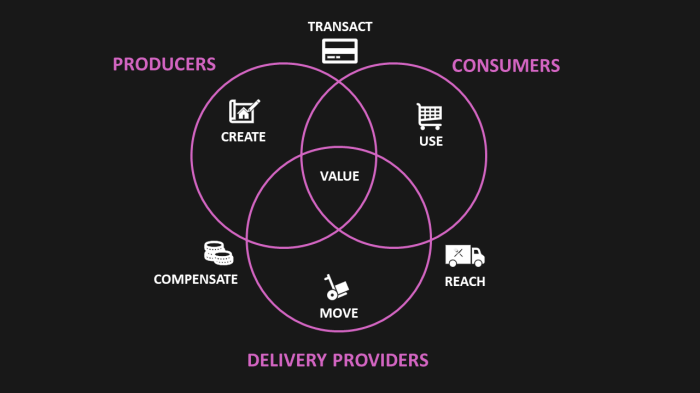
The platform business model represents a significant shift in how businesses operate, moving away from traditional linear value chains to a more networked and interconnected approach. It leverages technology to connect two or more distinct groups—often referred to as users and providers—creating value through their interaction. This interaction, facilitated by the platform, generates network effects, leading to exponential growth and unique competitive advantages.The core characteristics of a platform business model hinge on the creation of a shared infrastructure that enables interaction and exchange between distinct user groups.
This infrastructure can be physical (e.g., a shopping mall) or digital (e.g., an online marketplace). Key characteristics include the facilitation of interactions between users and providers, the leveraging of network effects to drive growth, and the creation of value through the interaction of these groups, rather than solely through the platform’s own production. The platform itself acts as an intermediary, enabling transactions, managing relationships, and setting the rules of engagement.
Examples of Successful Platform Businesses
Several successful platforms demonstrate the breadth and depth of this business model. Consider Airbnb, connecting travelers (users) with property owners (providers); Uber, connecting riders (users) with drivers (providers); and Amazon, connecting buyers (users) with sellers (providers). These platforms operate across different industries—hospitality, transportation, and e-commerce—illustrating the versatility of the platform approach. Other examples include LinkedIn (connecting professionals), YouTube (connecting content creators with viewers), and even traditional marketplaces like eBay and Etsy, which predate the digital revolution but still embody core platform characteristics.
Each successfully leverages network effects, where the value of the platform increases with the number of users and providers.
Comparison of Platform and Traditional Business Models
Traditional business models typically involve a linear value chain, where a company produces a product or service and sells it directly to consumers. Platform models, however, create value through facilitating interactions between users and providers. This leads to significant differences in how value is created, captured, and scaled. Traditional businesses focus on internal efficiency and cost control, while platforms prioritize network growth and user engagement.
The scalability of platform businesses often surpasses that of traditional businesses, as marginal costs are typically lower for each additional transaction facilitated. For instance, once Uber’s app is built, the marginal cost of adding another ride is significantly less than the marginal cost of adding another car to a traditional taxi fleet.
Key Value Propositions for Users and Providers
Platform businesses offer distinct value propositions to both users and providers. Users benefit from increased choice, convenience, and often lower prices due to competition among providers. Providers benefit from access to a large pool of potential customers, reduced marketing costs, and often streamlined operations. For example, Airbnb users benefit from a wide variety of accommodation options, while Airbnb hosts benefit from increased occupancy rates and exposure to a global audience.
Similarly, Uber riders benefit from convenient and affordable transportation, while Uber drivers benefit from flexible work arrangements and earning potential. This dual value proposition is crucial to the success of any platform business. The platform’s success is inherently tied to the success of both user and provider groups.
Revenue Generation Strategies in Platform Businesses
Platform businesses, unlike traditional businesses, derive revenue from facilitating interactions between two or more distinct user groups. This unique structure allows for a diverse range of revenue generation strategies, each with its own complexities and potential for optimization. Understanding these strategies is crucial for building a sustainable and profitable platform.Platform businesses typically employ a multi-faceted approach to revenue generation, relying on a combination of streams to maximize income and mitigate risk associated with reliance on a single source.
Diverse Revenue Streams in Platform Businesses
The most common revenue streams for platform businesses include transaction fees, subscription fees, and advertising. Transaction fees are a percentage of each transaction conducted on the platform. This model is prevalent in e-commerce platforms like eBay and Etsy. Subscription fees provide recurring revenue by offering premium features or access levels, as seen in platforms like Spotify and Netflix. Advertising revenue is generated by displaying ads to users, a common strategy employed by social media platforms like Facebook and Instagram.
Some platforms also utilize a combination of these models, creating a more robust and resilient revenue structure. For example, a dating app might charge a subscription fee for premium features while also generating revenue through targeted advertising.
Optimizing Pricing Strategies in Platform Businesses
Effective pricing is critical for platform success. Platforms often employ dynamic pricing, adjusting prices based on demand, competition, and user behavior. This allows for maximizing revenue during peak periods and adjusting pricing to remain competitive. For instance, ride-sharing apps like Uber and Lyft use surge pricing during high demand times, increasing prices to incentivize more drivers to come online and meet the increased demand.
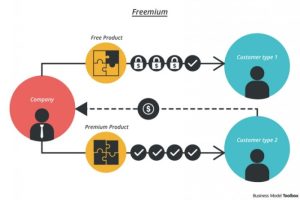
Another strategy is freemium pricing, offering a basic service for free while charging for premium features. This encourages user acquisition and allows for upselling opportunities. A successful freemium model balances user acquisition with the conversion of free users into paying subscribers. Careful analysis of user behavior and A/B testing of different pricing models are essential for optimizing revenue.
Hypothetical Revenue Model: A Skill-Sharing Platform
Consider a hypothetical platform connecting skilled individuals with those seeking their expertise – a modern-day version of a classifieds site, but focused on skills. This platform, called “SkillShareConnect,” would employ a dual revenue model. First, a commission-based transaction fee would be charged on each successful transaction (e.g., a 10% commission on the agreed-upon service price). Second, premium features, such as enhanced profile visibility, direct messaging, and access to advanced search filters, would be offered through a tiered subscription model.
This combined approach aims to generate revenue from both frequent and infrequent users, ensuring a balanced and sustainable revenue stream.
Balancing User Acquisition Costs and Revenue Generation
Acquiring new users is often expensive, especially for platforms operating in competitive markets. The challenge lies in balancing the cost of user acquisition (customer acquisition cost or CAC) with the revenue generated per user (customer lifetime value or CLTV). A successful platform needs a CLTV significantly higher than its CAC to ensure profitability. Strategies for managing this balance include focusing on organic growth through content marketing and social media engagement, targeted advertising campaigns with a strong focus on ROI, and referral programs that incentivize existing users to bring in new users at a reduced acquisition cost.
Constant monitoring of CAC and CLTV metrics is crucial for making data-driven decisions about marketing spend and pricing strategies. Platforms need to carefully evaluate the effectiveness of each user acquisition channel and optimize their spending accordingly. For example, if a particular social media campaign yields a low ROI, resources should be reallocated to more effective channels.
Network Effects and Platform Growth
Network effects are a cornerstone of successful platform businesses. They describe the phenomenon where the value of a platform increases as more users join. This positive feedback loop fuels exponential growth, creating a powerful barrier to entry for competitors. Understanding and leveraging network effects is crucial for platform strategists.Network effects are not a monolithic concept; rather, they manifest in several distinct ways.
Recognizing these different types allows for targeted strategies to enhance platform growth.
Types of Network Effects
Network effects can be categorized as either direct or indirect, and further subdivided into same-side and cross-side effects. Direct network effects occur when the value of the platform increases directly with the number of users already on the platform. Indirect network effects, on the other hand, involve the value increasing due to the presence of a different type of user on the platform.
Same-side effects refer to interactions between users of the same type, while cross-side effects relate to the interactions between different user types.
Direct Network Effects: Same-Side
Direct same-side network effects are the most straightforward type. The more users of a single type join a platform, the more valuable it becomes for existing users of that same type. For example, in a social media platform like Facebook, the more friends a user has, the more valuable the platform becomes for them. The larger the user base, the greater the potential for connections and interactions.
This increased value incentivizes further user acquisition, driving a self-reinforcing cycle of growth.
Direct Network Effects: Cross-Side
Direct cross-side network effects are observed when an increase in users of one type enhances the value for users of another type. A classic example is a ride-sharing platform like Uber. An increase in the number of drivers increases the value for riders (shorter wait times, greater availability). Conversely, more riders increase the earning potential for drivers, attracting more drivers to the platform.
This reciprocal relationship fuels rapid growth.
Indirect Network Effects
Indirect network effects are less direct but equally impactful. They involve the value of the platform increasing due to the presence of complementary goods or services. For example, the value of an app store (like the Apple App Store or Google Play Store) increases not only with the number of users but also with the number of apps available.
The more apps available, the more attractive the platform becomes to users, leading to further app development and, consequently, more users.
Case Study: The Growth of eBay
eBay’s success is a prime example of the power of network effects. Initially, the platform had a relatively small number of both buyers and sellers. However, as more sellers joined, attracting a wider variety of goods, the platform became more attractive to buyers. This, in turn, attracted more sellers, creating a virtuous cycle. The platform’s early success hinged on fostering this cross-side network effect, ultimately transforming it into a global e-commerce giant.
The larger the marketplace became, the greater the selection and the lower the prices, further attracting more users to both sides of the platform.
Accelerating Network Effects: A Hypothetical Platform
Let’s consider a hypothetical platform: “SkillSharePro,” a platform connecting freelance professionals with businesses needing specific skills. To accelerate network effects, a multi-pronged approach is necessary:
- Incentivize Early Adoption: Offer attractive sign-up bonuses and discounts to both freelancers and businesses to build a critical mass of users quickly.
- Targeted Marketing: Focus marketing efforts on specific industries and skill sets to attract both sides of the marketplace simultaneously.
- Community Building: Create features that encourage interaction and collaboration between freelancers and businesses, fostering a sense of community and increasing platform stickiness.
- Data-Driven Optimization: Continuously monitor user behavior and platform performance to identify areas for improvement and optimize the user experience to maximize network effects.
- Strategic Partnerships: Collaborate with complementary businesses to expand reach and attract new users.
By focusing on these strategies, SkillSharePro can effectively leverage network effects to achieve rapid growth and establish a strong market position.
Platform Governance and Management
Effective governance and management are crucial for the long-term success of any platform business. Managing a two-sided or multi-sided market presents unique challenges, requiring careful consideration of the needs and interactions of different user groups. A robust governance framework ensures a safe, trustworthy, and thriving ecosystem.The complexities of managing a two-sided or multi-sided market stem from the inherent interdependence of different user groups.
For example, in a ride-sharing platform, the success depends on both drivers and riders. Balancing the interests of these groups, ensuring fair treatment, and fostering a positive interaction environment requires sophisticated strategies and constant monitoring. This includes managing supply and demand, setting pricing models, and addressing potential conflicts.
Challenges of Managing Two-Sided or Multi-Sided Markets
Balancing the needs of multiple user groups is a constant challenge. For instance, a platform connecting freelancers with clients needs to ensure fair compensation for freelancers while also providing clients with value for money. Another challenge is managing the growth of each side of the market. Uneven growth can lead to imbalances, affecting the overall platform experience.
For example, if a ride-sharing platform has too many drivers and not enough riders, drivers will experience low earnings, potentially leading to them leaving the platform. Effective management requires proactive strategies to address these imbalances and ensure sustainable growth for all parties.
Establishing Trust and Safety Mechanisms
Trust and safety are foundational elements for any successful platform. Users need to feel confident that the platform is secure and that their interactions are protected. This requires a multi-pronged approach. Implementing robust verification processes for users, such as identity verification and background checks (where appropriate), is essential. Clear community guidelines outlining acceptable behavior and consequences for violations must be readily available and enforced consistently.
Furthermore, providing readily accessible reporting mechanisms for users to flag suspicious activity or violations is vital. Finally, proactive monitoring of user activity using algorithms and human moderators can help identify and address potential issues before they escalate.
Strategies for Effective Community Management and Moderation
Effective community management involves fostering a positive and engaging environment for all users. This includes providing clear communication channels, actively responding to user feedback, and addressing concerns promptly. Moderation efforts should be transparent and fair, with clear processes for handling violations. Using a combination of automated tools and human moderators is often the most effective approach. Automated tools can help identify potentially problematic content, while human moderators can provide context and make nuanced judgments.
Regular community feedback surveys and engagement initiatives can help gauge user satisfaction and identify areas for improvement. Proactive moderation, focusing on prevention rather than solely reacting to issues, is key to maintaining a healthy community.
Handling Disputes and Resolving Conflicts
A well-defined dispute resolution system is essential for maintaining trust and fairness on a platform. This system should be accessible, transparent, and impartial. Clear procedures for reporting disputes, along with timelines for resolution, should be Artikeld. The system should also offer various dispute resolution methods, such as mediation, arbitration, or even escalation to legal channels, depending on the nature and severity of the conflict.
Providing users with tools to communicate and attempt to resolve disputes directly before escalating them to the platform is also beneficial. A transparent and fair dispute resolution process demonstrates the platform’s commitment to user satisfaction and reinforces trust within the community.
The Role of Technology in Platform Businesses
Technology is the very foundation upon which platform businesses are built. Without robust and adaptable technological infrastructure, these businesses would struggle to connect users, facilitate transactions, and scale effectively. This section explores the critical role of technology, encompassing key enabling technologies, the power of data analytics, essential security considerations, and the strategic planning involved in creating a technology roadmap.
Key Technologies Enabling Platform Functionality
Several core technologies are indispensable for a successful platform business. These technologies work in concert to provide the user experience, manage transactions, and ensure the platform’s overall stability and scalability. For example, cloud computing provides the necessary infrastructure for handling large volumes of data and user traffic, while APIs (Application Programming Interfaces) enable seamless integration with third-party services and applications, expanding the platform’s functionality and reach.
Furthermore, sophisticated database management systems are crucial for storing and managing the vast amounts of data generated by platform activity. Mobile application development is also paramount, as many platforms rely heavily on mobile access for user engagement. Finally, real-time communication technologies, such as WebSockets, are vital for features requiring immediate feedback and interaction.
Data Analytics and User Behavior
Data analytics is not merely a helpful tool; it’s the lifeblood of a thriving platform business. By collecting and analyzing data on user behavior, preferences, and interactions, platforms can gain invaluable insights into their user base. This data allows for personalized recommendations, targeted marketing campaigns, and iterative improvements to the platform’s design and functionality. For instance, analyzing user engagement metrics can reveal which features are most popular and which areas need improvement.
Analyzing transaction data can help identify trends and patterns in consumer behavior, informing product development and marketing strategies. Predictive analytics can even forecast future trends, enabling proactive adjustments to the platform’s offerings and resources. Consider a ride-sharing platform using data analytics to optimize pricing based on real-time demand, or an e-commerce platform leveraging user purchase history to suggest relevant products.
Security Considerations in Platform Businesses
Security is paramount for any platform business, especially those handling sensitive user data and financial transactions. Robust security measures are essential to protect user privacy, maintain trust, and avoid costly data breaches. These measures should include comprehensive data encryption, both in transit and at rest; robust authentication and authorization systems to verify user identities and control access to sensitive information; and regular security audits and penetration testing to identify and address vulnerabilities.
Furthermore, platforms must comply with relevant data privacy regulations, such as GDPR and CCPA, and have a clear incident response plan in place to handle any security breaches effectively. Ignoring these considerations can lead to reputational damage, financial losses, and legal repercussions.
Technology Roadmap for a New Platform Business
Developing a comprehensive technology roadmap is crucial for the success of any new platform business. This roadmap should Artikel the technological infrastructure required, the key features to be developed, and a timeline for implementation. It should start with a Minimum Viable Product (MVP) focusing on core functionality, allowing for early user feedback and iterative development. Subsequent phases should address scalability, security enhancements, and the integration of new features based on user needs and market trends.
For example, a social media platform might start with basic profile creation, messaging, and newsfeed functionality, before expanding to features like group chats, live streaming, and e-commerce integration. This phased approach allows for controlled growth and minimizes the risk of investing heavily in features that may not resonate with users. The roadmap should also incorporate regular reviews and adjustments based on performance data and evolving market dynamics.
Business Development in the Context of Platform Businesses
Business development for platform businesses differs significantly from traditional models. Success hinges on expanding the network, fostering engagement, and strategically leveraging the inherent network effects. This involves a multi-pronged approach encompassing strategic partnerships, targeted market expansion, and sustainable scaling of operations.
Effective business development in the platform context requires a deep understanding of the platform’s unique value proposition and its target user segments. Strategies must focus on attracting and retaining both sides of the network (e.g., buyers and sellers, creators and consumers) to maximize network effects and drive sustainable growth. This necessitates a proactive approach to partnership building, a data-driven understanding of market opportunities, and a robust operational framework capable of handling exponential growth.
Successful Business Development Strategies for Platform Businesses
Several successful platform businesses have employed diverse strategies to achieve growth. Airbnb, for example, leveraged strategic partnerships with property management companies and travel agencies to expand its reach and increase its inventory of listings. Uber, on the other hand, focused on aggressive market penetration, often utilizing substantial marketing budgets and incentives to attract both riders and drivers. These approaches, while different, share a common thread: a focus on expanding the network and enhancing user experience.
Another example is Spotify, which initially focused on building a strong music catalog through licensing agreements and later expanded into podcasts and original content to diversify its offerings and attract a wider user base. These examples highlight the importance of adapting business development strategies to the specific context of the platform and its target market.
Best Practices for Forming Strategic Partnerships and Alliances
Building strong strategic partnerships is crucial for platform growth. Successful partnerships are based on mutual benefit, clear communication, and shared goals. Due diligence is paramount; a thorough assessment of potential partners’ capabilities, resources, and alignment with the platform’s vision is essential. Negotiating clear terms and conditions, including roles, responsibilities, and revenue sharing, is also critical to avoid future conflicts.
Furthermore, ongoing communication and collaboration are key to maintaining a healthy and productive partnership. A successful partnership, like the one between Uber and Spotify, allows users to seamlessly integrate services, enhancing the overall platform experience and driving engagement.
Business Development Plan for Expanding a Platform Business into New Markets
A robust business development plan for market expansion should incorporate thorough market research, a localized marketing strategy, and adaptation of the platform to local needs and regulations. Market research should identify the target audience, competitive landscape, and potential regulatory hurdles. The marketing strategy should be tailored to resonate with the local culture and preferences, potentially employing local influencers or adapting the messaging to local dialects or customs.
Adapting the platform itself may involve translating the interface, integrating local payment systems, or incorporating features specific to the new market. For example, a ride-hailing platform expanding into a new country might need to integrate with local transportation authorities and comply with specific licensing requirements. This phased approach, prioritizing thorough research and local adaptation, minimizes risk and maximizes the chances of successful expansion.
Scaling Operations Sustainably
Sustainable scaling requires a well-defined operational strategy that can handle exponential growth without compromising the user experience or platform stability. This includes investing in robust infrastructure, optimizing processes, and building a strong team. Investing in scalable technology is crucial to ensure the platform can handle increasing traffic and data volume. Optimizing processes, such as automating tasks and streamlining workflows, can improve efficiency and reduce operational costs.
Building a strong team with the right skills and experience is also essential to manage growth effectively. Platforms that prioritize scalability from the outset, such as Netflix, which built its infrastructure to handle global streaming demand, are better positioned for long-term success. This proactive approach minimizes disruption and ensures continued platform performance even during periods of rapid growth.
Business Ethics in Platform Businesses
Platform businesses, while offering immense opportunities for innovation and economic growth, grapple with unique ethical challenges. Their scale and influence necessitate a proactive and comprehensive approach to ethical considerations, impacting not only their users but also the broader societal landscape. Failure to address these concerns can lead to reputational damage, legal repercussions, and a loss of user trust.The pervasive nature of data collection and algorithmic decision-making within platform ecosystems presents a complex ethical landscape.
Balancing user privacy with the need for data-driven improvements and personalization creates a constant tension. Similarly, content moderation presents significant ethical dilemmas, requiring platforms to navigate the fine line between freedom of expression and the prevention of harmful content, including hate speech, misinformation, and illegal activities.
Data Privacy Concerns in Platform Businesses
Data privacy is paramount. Platforms collect vast amounts of user data, often without fully transparent consent or understanding of how this data will be used. Ethical concerns arise regarding the potential for data breaches, unauthorized data sharing with third parties, and the use of data for discriminatory purposes. Examples include instances where user data has been improperly sold or used for targeted advertising without explicit consent, highlighting the need for robust data protection policies and practices.
A commitment to data minimization, transparency in data usage policies, and providing users with meaningful control over their data are crucial for building trust and complying with relevant regulations like GDPR and CCPA.
Content Moderation Challenges and Ethical Guidelines
Content moderation involves the complex task of identifying and removing harmful content while upholding freedom of speech. Defining what constitutes “harmful” can be subjective and culturally dependent, leading to biases in moderation decisions. The scale of content generated on many platforms makes manual moderation impractical, often relying on automated systems which may themselves perpetuate biases present in the training data.
Establishing clear ethical guidelines, coupled with robust appeals processes and transparency in moderation decisions, is essential. Platforms should strive for fairness and consistency in their moderation policies, ensuring that decisions are based on objective criteria and not influenced by political or commercial interests. Regular audits and external reviews of moderation practices can help to identify and mitigate biases.
Different Approaches to Addressing Ethical Concerns
Several approaches exist for addressing ethical concerns in platform businesses. Some prioritize self-regulation through the development of internal ethical guidelines and codes of conduct. Others advocate for external regulation through government oversight and legislation. A hybrid approach, combining self-regulation with external accountability mechanisms, is often considered the most effective. This approach allows for flexibility and innovation while providing a framework for addressing potential abuses.
Industry-wide initiatives and collaborations can also play a significant role in establishing best practices and promoting ethical standards.
Framework for Ensuring Ethical Practices
A comprehensive framework for ensuring ethical practices within a platform business should encompass several key elements: a clearly defined ethical code, comprehensive data privacy policies, transparent content moderation guidelines, robust mechanisms for user feedback and grievance redressal, regular ethical audits, and ongoing employee training on ethical considerations. This framework should be regularly reviewed and updated to adapt to evolving technologies and societal expectations.
Independent oversight bodies or ethical review boards could provide external accountability and ensure that the platform adheres to its stated ethical commitments. Ultimately, a commitment to ethical practices is not merely a compliance issue; it is fundamental to building a sustainable and trustworthy platform business.
Understanding the platform business model requires a holistic approach, considering not only its technical underpinnings but also its ethical implications and strategic nuances. Successfully navigating this landscape demands a keen awareness of network effects, robust governance, innovative revenue streams, and a commitment to ethical practices. By carefully considering these factors, entrepreneurs can leverage the power of the platform model to build thriving and sustainable businesses.
Query Resolution
What are the biggest risks associated with a platform business model?
Major risks include dependence on network effects (slow growth if not achieved), security breaches impacting user trust, regulatory challenges, and intense competition.
How can a platform business maintain a balance between user and provider needs?
Careful consideration of value propositions for both sides is key. Fair pricing, transparent policies, and effective communication are crucial for maintaining a healthy ecosystem.
What role does data analytics play in a successful platform business?
Data analytics are essential for understanding user behavior, optimizing pricing, identifying growth opportunities, and improving platform performance. Data-driven decisions are paramount.
How can a platform business ensure its long-term sustainability?
Long-term sustainability requires continuous innovation, adaptation to changing market conditions, a focus on user experience, and proactive management of ethical concerns.