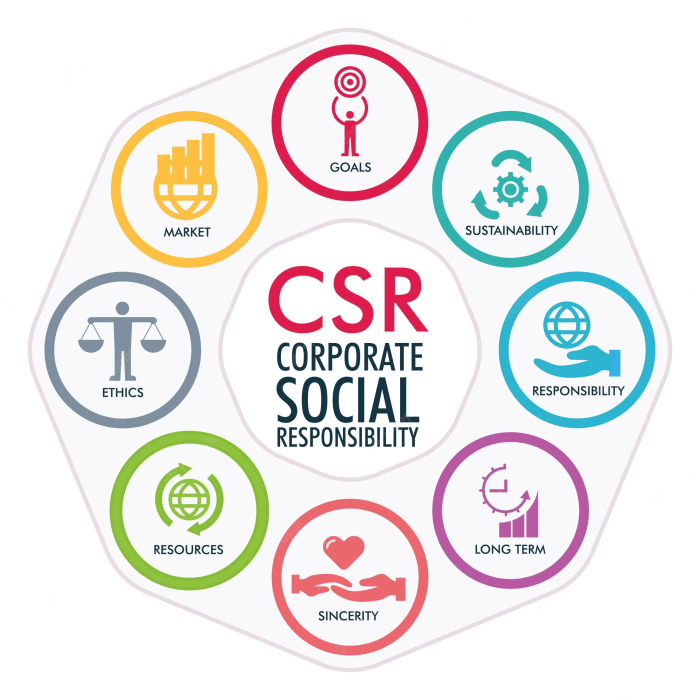
Corporate Social Responsibility (CSR) has evolved from a niche concept to a critical aspect of modern business. No longer simply a box-ticking exercise, CSR now represents a strategic imperative for companies seeking long-term sustainability and competitive advantage. This exploration delves into the multifaceted nature of CSR, examining its historical context, diverse models, practical implementation, and profound impact on various business functions.
From attracting top talent and enhancing brand reputation to securing investor confidence and fostering customer loyalty, the benefits of robust CSR initiatives are undeniable. However, navigating the complexities of ethical considerations, effective measurement, and stakeholder engagement requires a strategic and nuanced approach. This document aims to provide a comprehensive understanding of CSR, equipping businesses with the knowledge and tools to integrate it effectively into their core operations.
Defining Corporate Social Responsibility (CSR)
Corporate Social Responsibility (CSR) is a self-regulating business model that helps a company be socially accountable—to itself, its stakeholders, and the public. By practicing corporate social responsibility, companies can be conscious of the kind of impact they are having on all aspects of society, including economic, social, and environmental. Essentially, it’s about businesses going beyond simply maximizing profits and considering the broader societal and environmental consequences of their actions.CSR encompasses a wide range of activities, from charitable giving and environmental sustainability initiatives to ethical labor practices and community engagement.
Different interpretations exist, depending on the company’s values, industry, and the specific context. Some emphasize the ethical obligations of businesses, while others focus on the strategic benefits of aligning corporate actions with societal expectations.
Historical Evolution of CSR
The concept of CSR has evolved significantly over time. Early forms of CSR were largely philanthropic, with companies engaging in charitable donations or community support programs as separate activities from their core business operations. The 1960s and 70s witnessed a growing awareness of environmental issues and social justice concerns, leading to increased pressure on corporations to address their societal impact.
This period saw the emergence of stakeholder theory, which challenged the traditional shareholder primacy model and emphasized the importance of considering the interests of all stakeholders, including employees, customers, communities, and the environment. Subsequent decades saw a further refinement of CSR concepts, with the integration of sustainability principles, the rise of global reporting initiatives, and the increasing importance of transparency and accountability.
More recently, the focus has shifted towards integrating CSR into core business strategies, viewing it not as a separate function but as an integral part of value creation.
Comparison of CSR Models: Stakeholder vs. Shareholder
Two prominent models of CSR are the stakeholder model and the shareholder model. The shareholder model prioritizes maximizing shareholder value as the primary goal of the corporation. This model traditionally focuses on profitability and return on investment, with CSR initiatives often viewed as secondary or even detrimental to shareholder returns unless they directly contribute to the bottom line. In contrast, the stakeholder model adopts a broader perspective, recognizing that corporations have responsibilities to a wider range of stakeholders, including employees, customers, suppliers, communities, and the environment.
This model emphasizes the importance of balancing the interests of all stakeholders and achieving a positive societal impact alongside financial success. While the shareholder model often leads to a more narrowly focused approach to CSR, the stakeholder model encourages a more holistic and integrated approach. Many modern corporations now adopt a blended approach, recognizing the importance of both shareholder value and stakeholder interests.
Benefits and Challenges of Implementing CSR Initiatives
Implementing CSR initiatives offers numerous benefits for businesses. These include enhanced brand reputation and customer loyalty, improved employee engagement and retention, increased access to capital and investment, reduced operational costs through efficiency improvements and waste reduction, and improved risk management by proactively addressing potential social and environmental liabilities. However, implementing CSR also presents challenges. These can include the high costs associated with implementing and maintaining CSR programs, the difficulty of measuring and reporting on CSR performance, the potential for “greenwashing” (making misleading or unsubstantiated claims about environmental performance), and the need for significant changes in corporate culture and organizational structure to effectively integrate CSR into core business operations.
Successfully navigating these challenges requires a clear commitment from leadership, robust measurement systems, and transparent communication with stakeholders.
CSR Strategies and Implementation
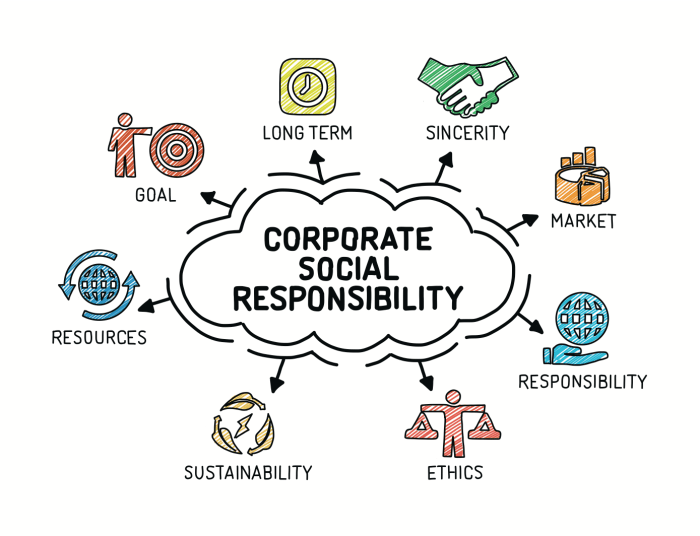
Developing and implementing a successful Corporate Social Responsibility (CSR) strategy requires a structured approach that aligns with a company’s core values and business objectives. A well-defined strategy ensures that CSR initiatives are not merely add-ons but integral components contributing to long-term sustainability and competitive advantage. This section Artikels a framework for creating and implementing such a strategy, showcases successful examples, and provides guidance on measurement and integration.
A Framework for Developing and Implementing a Comprehensive CSR Strategy
A comprehensive CSR strategy should be built upon a thorough understanding of the company’s context, including its industry, stakeholders, and operational footprint. The framework should be iterative, allowing for adaptation and improvement over time. The process begins with identifying material issues—those that are most significant to the business and its stakeholders—through a materiality assessment. This assessment involves engaging with various stakeholders (employees, customers, suppliers, communities, investors) to understand their priorities and concerns.
Once material issues are identified, the company can prioritize them based on their impact and the company’s capacity to address them. This leads to the development of specific, measurable, achievable, relevant, and time-bound (SMART) goals and initiatives. Finally, a robust monitoring and evaluation system, using key performance indicators (KPIs), is crucial for tracking progress and making necessary adjustments. The entire process should be documented and communicated transparently to all stakeholders.
Examples of Successful CSR Initiatives
Numerous companies have successfully integrated CSR into their core business operations. Patagonia, an outdoor clothing company, is renowned for its commitment to environmental sustainability. Their initiatives include using recycled materials, supporting environmental conservation efforts, and advocating for responsible business practices throughout their supply chain. This commitment has not only enhanced their brand reputation but also fostered customer loyalty.
Similarly, Unilever, a consumer goods giant, has implemented a Sustainable Living Plan focusing on improving health and well-being, reducing environmental impact, and enhancing livelihoods. Their efforts have resulted in significant improvements in their environmental footprint and positive social impact, while also driving business growth. In the technology sector, Microsoft has made significant strides in promoting digital literacy and accessibility, contributing to bridging the digital divide and empowering underserved communities.
These initiatives have strengthened their relationships with customers and reinforced their position as a responsible corporate citizen.
Key Performance Indicators (KPIs) for Measuring the Effectiveness of CSR Programs
Measuring the effectiveness of CSR programs is essential for demonstrating impact and informing future strategies. KPIs should be aligned with the specific goals and initiatives of the CSR strategy. Examples include: reductions in carbon emissions (environmental impact), improvements in employee satisfaction and diversity (social impact), and increases in ethical sourcing (governance impact). Quantifiable metrics such as the percentage of renewable energy used, the number of employees trained in diversity and inclusion, and the percentage of suppliers adhering to ethical standards are crucial for demonstrating progress.
Qualitative data, such as stakeholder feedback through surveys and focus groups, also provides valuable insights into the effectiveness of CSR programs.
Integrating CSR into a Company’s Core Business Operations: A Step-by-Step Guide
Integrating CSR effectively requires a systematic approach. The first step involves securing leadership buy-in and commitment. This ensures that CSR is prioritized and integrated into the overall business strategy. Next, a dedicated CSR team or individual should be responsible for overseeing the implementation of the strategy. The team should collaborate with various departments to embed CSR considerations into all aspects of the business, from product development to supply chain management.
Regular reporting and communication with stakeholders are vital to ensure transparency and accountability. Finally, continuous improvement is essential. The company should regularly review and update its CSR strategy based on performance data, stakeholder feedback, and evolving best practices.
Comparison of CSR Reporting Frameworks
Different reporting frameworks provide structures for companies to disclose their CSR performance. The choice of framework depends on factors such as industry, company size, and stakeholder expectations.
| Framework | Focus | Key Requirements | Advantages |
|---|---|---|---|
| Global Reporting Initiative (GRI) | Comprehensive sustainability reporting | Materiality assessment, stakeholder engagement, performance indicators | Widely recognized, flexible framework |
| Sustainability Accounting Standards Board (SASB) | Materiality-focused, industry-specific standards | Industry-specific metrics and disclosures | Focus on financially material issues |
| Task Force on Climate-related Financial Disclosures (TCFD) | Climate-related risks and opportunities | Governance, strategy, risk management, metrics and targets | Focus on climate change, increasing investor demand |
| United Nations Sustainable Development Goals (SDGs) | Alignment with global development goals | Contribution to SDGs through specific initiatives | Alignment with global sustainability agenda |
CSR and Business Development
Corporate Social Responsibility (CSR) is no longer simply a philanthropic exercise; it’s a strategic imperative deeply intertwined with a company’s long-term business development. A robust CSR strategy can significantly enhance a company’s bottom line by fostering positive relationships with stakeholders, improving operational efficiency, and driving innovation. This section explores the multifaceted relationship between CSR and business development, showcasing how responsible business practices translate into tangible business benefits.CSR’s impact on a company’s reputation and brand image is undeniable.
Consumers, particularly younger generations, are increasingly conscious of ethical and sustainable practices, actively seeking out businesses that align with their values. A strong CSR profile can differentiate a company from its competitors, enhancing its brand reputation and attracting customers who are willing to pay a premium for products and services from responsible companies.
CSR’s Influence on Reputation and Brand Image
A positive CSR reputation translates into increased brand loyalty and customer advocacy. Consumers are more likely to purchase from and remain loyal to companies known for their ethical and sustainable practices. This enhanced brand image can also lead to increased market share as consumers actively choose companies that demonstrate a commitment to social and environmental responsibility. For instance, Patagonia, known for its commitment to environmental sustainability and fair labor practices, enjoys significant brand loyalty and a strong market position, demonstrating the direct link between CSR and business success.
Their commitment to repairing and recycling products further strengthens their image. This proactive approach to sustainability enhances their brand perception and fosters customer trust.
CSR and Talent Acquisition and Retention
Incorporating CSR principles into a company’s culture is a powerful tool for attracting and retaining top talent. Many job seekers, especially millennials and Gen Z, prioritize working for companies with strong ethical values and a commitment to social responsibility. A company’s CSR initiatives can improve employee morale and engagement by giving employees a sense of purpose and pride in their work.
This increased employee engagement often translates into higher productivity and lower turnover rates. Companies like Unilever, with their strong focus on sustainability goals and employee empowerment programs, have been successful in attracting and retaining talent by aligning their business strategy with employee values. Their commitment to diversity and inclusion initiatives also contributes to a positive work environment.
CSR and Increased Customer Loyalty and Market Share
Demonstrating a genuine commitment to CSR can significantly enhance customer loyalty. Consumers are more likely to remain loyal to companies that align with their values, leading to increased customer lifetime value. This loyalty, combined with the positive brand image associated with strong CSR practices, can lead to increased market share. For example, companies like TOMS Shoes, with their “One for One” model, have built a strong customer base by directly linking their business model to a social cause.
This clear connection between purchase and social impact fosters strong customer loyalty and drives sales.
CSR’s Impact on Investor Relations and Access to Capital
Strong CSR practices can significantly influence investor relations and access to capital. Many investors, particularly socially responsible investors (SRIs), actively seek out companies with strong CSR profiles. A robust CSR strategy can attract investment, lower the cost of capital, and improve access to business loans. Companies with demonstrably strong environmental, social, and governance (ESG) performance often receive higher credit ratings, reducing their borrowing costs.
This positive perception among investors leads to improved access to funding and strengthens the company’s financial position. Companies that publicly report on their ESG performance and demonstrate transparency in their CSR initiatives tend to attract more favorable investor attention.
CSR and Business Ethics
Corporate Social Responsibility (CSR) and business ethics are deeply intertwined yet distinct concepts. While both aim to guide responsible corporate behavior, CSR focuses on a company’s contribution to society and the environment, encompassing a broader range of activities, whereas business ethics concentrates on the moral principles governing internal operations and stakeholder interactions. Understanding their relationship is crucial for building a sustainable and trustworthy organization.
The Interconnectedness and Differences Between CSR and Business Ethics
CSR initiatives are fundamentally grounded in ethical considerations. A company’s commitment to ethical practices—such as fair labor standards, environmental protection, and transparent operations—underpins its ability to effectively engage in CSR. Conversely, a robust CSR strategy can strengthen a company’s ethical foundation by fostering a culture of responsibility and accountability. However, CSR can sometimes be perceived as a mere marketing tactic if not genuinely integrated with ethical business practices.
True CSR stems from an internal commitment to ethical principles, not just external pressure or public relations efforts. The difference lies in the scope: business ethics guides internal conduct, while CSR extends that focus outward to broader societal impact.
Ethical Considerations in Developing and Implementing CSR Initiatives
Developing and implementing effective CSR initiatives requires careful consideration of various ethical dilemmas. For instance, ensuring fair wages and safe working conditions in the global supply chain presents a significant challenge. Companies must navigate complex international labor laws and cultural norms while upholding their ethical commitments. Similarly, balancing environmental sustainability with economic viability necessitates careful planning and investment in environmentally friendly technologies.
Transparency in reporting CSR activities is paramount; companies must avoid “greenwashing”—the act of misleading consumers regarding a company’s environmental practices. Ethical sourcing of materials, responsible waste management, and fair competition are other key considerations.
The Role of Corporate Governance in Ensuring Ethical and Responsible Business Practices
Strong corporate governance plays a vital role in fostering ethical behavior and effective CSR implementation. A well-defined governance structure, including a clear ethical code of conduct, independent oversight boards, and transparent reporting mechanisms, establishes a framework for responsible decision-making. Accountability at all levels of the organization is crucial. Leaders must champion ethical practices and hold employees accountable for upholding them.
Regular ethical audits and risk assessments can help identify potential vulnerabilities and ensure compliance with relevant regulations and ethical standards. This proactive approach strengthens a company’s ethical foundation and promotes sustainable growth.
Potential Ethical Dilemmas in Relation to CSR and Proposed Solutions
Several ethical dilemmas can arise during CSR implementation. For example, a company might face a conflict between maximizing profits and investing in sustainable practices. A solution could involve a long-term perspective that prioritizes sustainable growth over short-term gains. Another dilemma could be the trade-off between protecting employee privacy and using data for CSR initiatives, such as improving workplace safety.
A solution would involve obtaining informed consent and ensuring data anonymization and security. Furthermore, companies may struggle to balance local community needs with broader global CSR objectives. Addressing this requires engaging with local stakeholders and developing culturally sensitive CSR programs.
A Hypothetical Company’s Code of Conduct Integrating CSR Principles
“At [Company Name], we are committed to conducting our business with integrity, transparency, and respect for all stakeholders. We believe that ethical conduct and social responsibility are essential for sustainable success. This code of conduct Artikels our commitment to these principles.”
Our Code of Conduct emphasizes:
- Fair Labor Practices: We are committed to providing fair wages, safe working conditions, and equal opportunities to all employees, regardless of their background or location.
- Environmental Sustainability: We strive to minimize our environmental footprint by reducing waste, conserving resources, and investing in environmentally friendly technologies.
- Ethical Sourcing: We source our materials responsibly, ensuring that our suppliers adhere to ethical labor practices and environmental standards.
- Community Engagement: We are committed to supporting the communities in which we operate through charitable contributions, volunteer work, and partnerships with local organizations.
- Transparency and Accountability: We are committed to transparent reporting of our CSR activities and holding ourselves accountable for our commitments.
CSR and Business Coaching/Strategy/Model
Integrating Corporate Social Responsibility (CSR) into a company’s core strategy isn’t merely an ethical imperative; it’s a powerful driver of long-term business success. A well-structured CSR program can enhance brand reputation, attract and retain top talent, improve operational efficiency, and unlock new market opportunities. This section explores how business coaching can facilitate this integration, examines successful CSR-centric business models, and details strategies for effective communication and impact measurement.
Designing a Business Coaching Program for CSR Integration
A successful business coaching program focused on CSR integration should be tailored to the specific needs and context of each company. However, a common framework might include modules on defining material CSR issues, conducting a materiality assessment, setting measurable targets aligned with the UN Sustainable Development Goals (SDGs), developing a comprehensive CSR strategy, integrating CSR into existing business processes, and establishing robust monitoring and reporting mechanisms.
The program should also incorporate practical exercises, case studies, and peer-to-peer learning opportunities to facilitate knowledge sharing and best practice adoption. Coaches should possess expertise in both business strategy and sustainability, ensuring a holistic approach.
Examples of Successful CSR-Integrated Business Models
Several companies have successfully integrated CSR into their core business models, demonstrating the potential for both social good and financial return. Patagonia, for instance, has built its brand around environmental activism, using its platform to advocate for conservation and sustainable practices. Their commitment resonates deeply with environmentally conscious consumers, strengthening brand loyalty and driving sales. Similarly, Unilever’s Sustainable Living Plan, focused on reducing environmental impact and improving social conditions throughout its supply chain, has demonstrably contributed to both improved brand perception and financial performance.
These examples showcase how a genuine commitment to CSR can become a competitive advantage.
Strategies for Communicating the Value of CSR to Stakeholders
Effective communication is crucial for maximizing the impact of CSR initiatives. Transparency is key; stakeholders need to understand a company’s CSR strategy, its progress, and its challenges. This involves publishing regular CSR reports, utilizing multiple communication channels (website, social media, annual reports), and engaging directly with stakeholders through forums and feedback mechanisms. For employees, internal communication campaigns can highlight CSR initiatives, employee volunteering opportunities, and the company’s overall commitment to sustainability.
For customers, emphasizing the social and environmental benefits of products and services can be a powerful marketing tool. Finally, engaging with investors through dedicated sustainability reports and transparent disclosures on environmental, social, and governance (ESG) factors is essential for attracting responsible investment.
Measuring and Reporting on Social and Environmental Impact
Measuring and reporting on CSR performance is crucial for demonstrating accountability and driving continuous improvement. Companies should establish clear Key Performance Indicators (KPIs) aligned with their CSR strategy, using both quantitative and qualitative data to track progress. This could include metrics such as greenhouse gas emissions, water usage, waste generation, employee satisfaction, community engagement, and supply chain sustainability.
Regular reporting, using established frameworks like the Global Reporting Initiative (GRI) standards or the Sustainability Accounting Standards Board (SASB) standards, provides transparency and allows stakeholders to assess the company’s performance. Independent verification of data adds credibility and enhances trust.
CSR’s Influence on a Company’s Overall Business Model
CSR can significantly influence a company’s overall business model, impacting its supply chain, operations, and product development. Integrating CSR principles into supply chain management can lead to more ethical and sustainable sourcing practices, reducing environmental and social risks. This might involve working with suppliers who share the company’s commitment to sustainability, implementing fair labor practices throughout the supply chain, and minimizing environmental impact during transportation and logistics.
In operations, CSR can drive efficiency improvements through waste reduction, energy conservation, and the adoption of cleaner technologies. Finally, incorporating CSR considerations into product development can lead to the creation of more sustainable and socially responsible products that meet the needs of both consumers and the planet.
CSR and Business Travel
Business travel, while essential for many organizations, carries a significant environmental footprint. The increasing awareness of climate change necessitates a shift towards more sustainable practices within corporate travel policies. Reducing the carbon emissions associated with business trips is not only environmentally responsible but can also enhance a company’s reputation and contribute to long-term cost savings.
Environmental Impact of Business Travel and Minimizing Carbon Footprint
Air travel, in particular, is a major contributor to greenhouse gas emissions. The burning of jet fuel releases significant amounts of carbon dioxide, contributing to global warming. Other modes of transportation, such as driving and train travel, also have environmental impacts, although generally less significant than air travel. Minimizing the carbon footprint of business travel requires a multi-faceted approach, encompassing choices in transportation, accommodation, and meeting formats.
Strategies include opting for more fuel-efficient vehicles, choosing direct flights to reduce flight time and emissions, and utilizing video conferencing as an alternative to in-person meetings whenever feasible. Carbon offsetting programs can also play a role, although they should be considered supplementary to, not a replacement for, emission reduction strategies.
Sustainable Practices in Business Travel Policies and Procedures
Incorporating sustainable practices into business travel policies requires a proactive approach. This includes establishing clear guidelines for choosing transportation methods, prioritizing environmentally friendly options, and setting limits on travel frequency and duration where possible. The company should provide employees with training on sustainable travel practices and offer incentives for choosing greener options. Policies should also address the selection of sustainable accommodations, such as hotels with green certifications, and encourage the reduction of waste during travel through practices like reusable water bottles and avoiding single-use plastics.
Regular monitoring and reporting of the company’s travel-related emissions are crucial for tracking progress and identifying areas for improvement.
Examples of Companies Reducing Business Travel Emissions
Several companies have demonstrated success in reducing their business travel emissions. For example, some technology companies have significantly reduced their reliance on air travel by adopting a “virtual-first” approach to meetings and collaborations. Other organizations have implemented robust travel policies that incentivize the use of train travel and video conferencing, resulting in measurable reductions in their carbon footprint.
These successful examples highlight the potential for significant emission reductions through strategic planning and the adoption of innovative solutions. These companies often publicly report their progress, demonstrating transparency and accountability.
Checklist of Sustainable Business Travel Practices
Before any business trip, a comprehensive checklist can ensure adherence to sustainable practices.
- Transportation: Prioritize train travel or other ground transportation over air travel whenever feasible. If air travel is necessary, choose direct flights and consider carbon offsetting.
- Accommodation: Select hotels with green certifications or demonstrably sustainable practices.
- Meetings: Explore virtual meeting options as alternatives to in-person meetings whenever possible.
- Waste Reduction: Utilize reusable water bottles, coffee cups, and other items to minimize single-use plastics.
- Carbon Offsetting: Consider investing in verified carbon offset projects to compensate for unavoidable emissions.
- Reporting: Track and report travel-related emissions to monitor progress and identify areas for improvement.
Comparison of Transportation Modes for Business Travel
The choice of transportation significantly impacts both environmental impact and cost-effectiveness.
| Mode of Transportation | Environmental Impact (CO2 per passenger-km) | Cost-Effectiveness | Suitability for Business Travel |
|---|---|---|---|
| Air Travel | High | Often High | Suitable for long distances, but increasingly scrutinized for environmental impact. |
| Train Travel | Moderate | Often Moderate | Suitable for medium to long distances, especially in well-developed rail networks. |
| Car Travel | Moderate to High (depending on vehicle efficiency and occupancy) | Variable, often lower than air travel for shorter distances. | Suitable for shorter distances, but less efficient for multiple passengers. |
| Video Conferencing | Very Low | Very Low | Excellent alternative for many meetings, especially those involving multiple locations. |
In conclusion, embracing Corporate Social Responsibility is not merely a trend but a fundamental shift in how businesses operate and interact with the world. By strategically integrating CSR principles into every facet of their operations, companies can unlock significant competitive advantages while contributing positively to society and the environment. The journey toward responsible business practices is ongoing, requiring continuous evaluation, adaptation, and a commitment to transparency and accountability.
The long-term success of any business increasingly hinges on its ability to demonstrate genuine commitment to sustainable and ethical practices.
Key Questions Answered
What is the difference between CSR and philanthropy?
While both involve positive social contributions, philanthropy is typically charitable giving separate from core business operations, whereas CSR integrates social and environmental concerns directly into a company’s strategy and operations.
How can I measure the ROI of CSR initiatives?
Measuring CSR ROI requires a multifaceted approach, tracking both qualitative (e.g., improved brand reputation, employee morale) and quantitative (e.g., increased sales, reduced operational costs) impacts. Key Performance Indicators (KPIs) should be carefully selected to align with specific CSR goals.
What are some common pitfalls to avoid when implementing CSR?
Common pitfalls include greenwashing (misrepresenting CSR efforts), lack of stakeholder engagement, insufficient resource allocation, and a failure to properly measure and report on progress.
How can small businesses incorporate CSR?
Even small businesses can integrate CSR by focusing on areas where they can make a tangible difference, such as supporting local communities, adopting sustainable practices, and promoting ethical sourcing.


