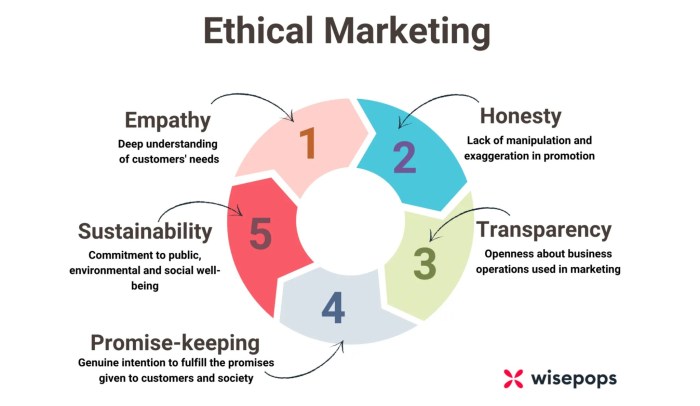
In today’s increasingly conscious consumer landscape, ethical marketing strategies are no longer a mere trend but a critical component of sustainable business success. This guide delves into the core principles of ethical marketing, exploring its practical applications across various channels and demonstrating how businesses can leverage these strategies to build lasting trust, enhance brand reputation, and achieve genuine growth.
We will examine the complexities of navigating ethical dilemmas in digital marketing, influencer collaborations, and data usage, while showcasing successful case studies and providing actionable frameworks for ethical decision-making.
From defining ethical marketing’s core tenets and identifying unethical practices to integrating sustainability and fostering ethical business development, we’ll cover a wide spectrum of relevant topics. We’ll also explore the crucial role of business coaching and the ethical implications of financing marketing initiatives through business loans. Ultimately, this guide aims to equip businesses with the knowledge and tools necessary to implement ethical marketing strategies that align with their values and contribute to a more responsible and sustainable future.
Defining Ethical Marketing
Ethical marketing prioritizes fairness, transparency, and respect in all marketing communications and activities. It moves beyond simply complying with legal regulations to embrace a higher standard of conduct that builds trust and fosters positive relationships with consumers. This approach recognizes the societal impact of marketing and strives to minimize negative consequences while maximizing positive contributions.Ethical marketing operates on several core principles.
These include honesty and truthfulness in advertising and promotions, respecting consumer privacy and data security, avoiding manipulative or deceptive practices, and promoting fair competition. A commitment to social responsibility, environmental sustainability, and the well-being of all stakeholders is also central to ethical marketing practices.
Unethical Marketing Practices and Their Consequences
Unethical marketing tactics often prioritize short-term gains over long-term sustainability and brand reputation. Examples include misleading advertising, such as exaggerating product benefits or using deceptive imagery; manipulative pricing strategies, such as price gouging or bait-and-switch tactics; and the exploitation of vulnerable consumer groups through targeted marketing of harmful products or services. The consequences of unethical marketing can be severe, leading to damaged brand reputation, loss of consumer trust, legal penalties, and even financial ruin.
For instance, the Volkswagen emissions scandal resulted in billions of dollars in fines and a severely damaged brand image due to the company’s deliberate deception regarding its vehicles’ emissions levels. Similarly, numerous companies have faced boycotts and significant financial losses after engaging in misleading advertising or discriminatory marketing practices.
Building Trust and Transparency with Consumers
Building and maintaining consumer trust is paramount for ethical marketing success. This involves several key strategies. Open and honest communication is essential, providing consumers with accurate and complete information about products and services. Transparency in pricing and business practices is equally crucial, avoiding hidden fees or deceptive pricing structures. Active engagement with consumers through social media and other channels allows for direct feedback and addresses concerns promptly and effectively.
Respecting consumer privacy and protecting their data is another vital aspect, avoiding the unauthorized collection or use of personal information. Companies that demonstrate a genuine commitment to ethical practices often enjoy increased customer loyalty and positive word-of-mouth marketing.
A Framework for Evaluating Ethical Implications of Marketing Campaigns
A robust framework for evaluating the ethical implications of marketing campaigns involves a multi-step process. First, marketers should clearly define their target audience and understand their needs and vulnerabilities. Next, they should carefully consider the potential impact of their message and imagery, ensuring it is not misleading, manipulative, or exploitative. This includes assessing the potential for unintended consequences or negative social impacts.
A thorough review of relevant laws and regulations is also crucial to ensure compliance. Finally, the campaign should be subject to internal review and ethical considerations should be incorporated throughout the entire marketing process. This framework promotes responsible decision-making and helps mitigate potential ethical risks associated with marketing campaigns. Using this framework, companies can proactively identify and address potential ethical concerns, leading to more responsible and sustainable marketing practices.
Ethical Considerations in Different Marketing Channels
Ethical marketing practices must adapt to the unique challenges presented by various marketing channels. The increasing interconnectedness of these channels necessitates a holistic approach, ensuring consistency and transparency across all platforms. Failure to do so can lead to reputational damage and erode consumer trust.
Ethical Challenges of Influencer Marketing
Influencer marketing, while highly effective, presents significant ethical dilemmas. The primary concern revolves around transparency and disclosure. Consumers need to clearly understand when they are viewing sponsored content, and influencers have a responsibility to disclose any material connections with brands they promote. Failing to do so can be misleading and deceptive, damaging both the influencer’s credibility and the brand’s reputation.
Another key ethical consideration is the selection of influencers. Brands must ensure that the influencers they partner with align with their values and target audience, avoiding those with histories of promoting harmful or misleading products or services. For example, a fitness brand partnering with an influencer known for promoting unhealthy weight loss methods would be ethically questionable.
Ethical Implications of Digital Marketing versus Traditional Marketing
While both digital and traditional marketing present ethical challenges, the nature of those challenges differs. Traditional marketing, such as print advertising or television commercials, often faces scrutiny regarding accuracy and potential for manipulation through carefully crafted imagery and messaging. Digital marketing, however, introduces new ethical complexities related to data privacy, targeted advertising, and the potential for algorithmic bias. For example, a traditional newspaper ad might make a claim about a product’s efficacy that is later proven false, whereas a digital ad might use user data to target vulnerable individuals with predatory financial products.
The speed and reach of digital channels also amplify the potential consequences of unethical practices.
Potential Ethical Issues in Social Media Marketing
Social media marketing presents a unique set of ethical challenges due to its interactive and often informal nature. Issues such as fake followers, astroturfing (creating artificial grassroots support), and the spread of misinformation are prevalent. Brands need to be mindful of the content they share and the communities they engage with, avoiding the amplification of harmful stereotypes or the promotion of divisive ideologies.
Furthermore, the use of user-generated content requires careful consideration of copyright and privacy issues. A company using a customer’s photo without permission, for example, would be a clear ethical breach.
Ethical Use of Data in Targeted Advertising
Targeted advertising, while effective, raises significant ethical concerns regarding data privacy and potential for discrimination. The collection and use of personal data for advertising purposes require transparency and user consent. Companies must be upfront about the data they collect, how it’s used, and the options users have to control their data. Furthermore, algorithms used in targeted advertising can perpetuate existing biases, leading to discriminatory outcomes.
For instance, an algorithm might disproportionately target certain demographics with predatory financial products based on historical data, exacerbating existing inequalities.
Responsible Email Marketing Strategy
A responsible email marketing strategy prioritizes user consent and data privacy. This means obtaining explicit permission before adding individuals to mailing lists, providing clear unsubscribe options, and adhering to relevant data protection regulations (such as GDPR or CCPA). Emails should be relevant and valuable to recipients, avoiding excessive frequency or irrelevant content. Furthermore, a responsible strategy ensures that email marketing materials are accessible to all users, regardless of their abilities or technological limitations.
This includes using clear and concise language, providing alt text for images, and ensuring compatibility with various email clients and devices. Transparency in the email’s origin and purpose is paramount.
Sustainability and Ethical Marketing
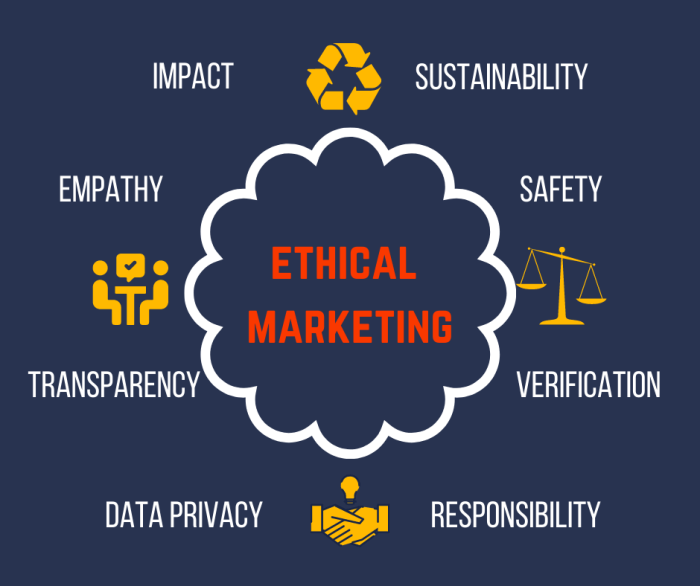
Integrating sustainability into marketing strategies is no longer a “nice-to-have” but a business imperative. Consumers are increasingly conscious of environmental and social issues, and their purchasing decisions reflect this awareness. A strong ethical and sustainable marketing approach not only enhances brand reputation but also fosters customer loyalty and drives long-term growth.Companies can integrate sustainability by focusing on product lifecycle assessment, reducing their environmental footprint throughout the supply chain, and transparently communicating their sustainability efforts to consumers.
This includes highlighting eco-friendly materials, sustainable packaging, and responsible manufacturing processes. Marketing campaigns can emphasize the positive environmental and social impact of the product or service, thereby appealing to ethically-conscious consumers. Furthermore, supporting environmental and social causes aligns a brand with values that resonate with a growing segment of the market.
Integrating Sustainability into Marketing Strategies
Successful integration requires a holistic approach, embedding sustainability across all aspects of marketing. This involves aligning product development with sustainable practices, using eco-friendly marketing materials, and measuring the environmental impact of marketing campaigns. For example, a company could choose to use recycled paper for brochures, reduce its carbon footprint through digital marketing, and partner with environmental organizations to amplify its sustainability message.
A commitment to transparency is crucial; consumers need to see concrete evidence of a company’s sustainable practices to build trust.
Patagonia: A Case Study in Ethical and Sustainable Marketing
Patagonia, an outdoor clothing company, exemplifies ethical and sustainable marketing. Their commitment to environmental protection is deeply embedded in their brand identity. They utilize recycled materials in their products, support environmental activism, and openly communicate the environmental impact of their manufacturing processes. Their marketing campaigns frequently highlight their sustainability initiatives, emphasizing their commitment to fair labor practices and environmental responsibility.
This transparent approach has resonated strongly with their target audience, solidifying their position as a leader in ethical and sustainable business practices. Their “Don’t Buy This Jacket” campaign, encouraging consumers to consider the longevity of their purchases before buying new ones, is a prime example of their commitment to sustainability over mere profit maximization. This resonates with environmentally conscious consumers who value durability and responsible consumption.
Certifications and Standards for Ethical and Sustainable Marketing
Several certifications and standards provide frameworks for ethical and sustainable marketing practices. These certifications offer third-party validation of a company’s claims, building consumer trust and enhancing brand credibility. It is important to note that the relevance of a specific certification depends on the industry and the specific sustainability aspects being addressed.
- Fair Trade Certification: Guarantees fair prices and working conditions for producers in developing countries.
- B Corp Certification: Recognizes companies that meet high standards of social and environmental performance, accountability, and transparency.
- LEED Certification (Leadership in Energy and Environmental Design): Focuses on sustainable building design and construction, relevant for companies with physical locations.
- Organic Certifications (e.g., USDA Organic): Certifies that agricultural products are produced using organic farming methods.
- Forest Stewardship Council (FSC) Certification: Ensures that wood and paper products come from responsibly managed forests.
Examples of Greenwashing and How to Avoid It
Greenwashing involves making misleading or unsubstantiated claims about the environmental benefits of a product or service. This practice erodes consumer trust and can damage a company’s reputation. Avoiding greenwashing requires transparency, accuracy, and a genuine commitment to sustainability. For example, a company should avoid using vague or ambiguous terms like “eco-friendly” without providing specific evidence to support the claim.
Instead, they should clearly communicate the specific environmental benefits of their product or service, using verifiable data and third-party certifications to substantiate their claims. Using credible certifications and providing detailed information about the product’s lifecycle and environmental impact are crucial steps in avoiding accusations of greenwashing. For instance, a company claiming to use “sustainable” packaging should specify the type of recycled material used, the percentage of recycled content, and the recyclability of the packaging itself.
Vague claims without supporting data are a hallmark of greenwashing.
The Role of Business Development in Ethical Marketing
Business development plays a crucial role in ensuring ethical marketing practices are not just implemented but integrated into the very core of a company’s strategy. It’s not simply a matter of adding an “ethics” layer; it’s about building a business model where ethical considerations are fundamental to growth and success. This approach fosters a sustainable and responsible business, benefiting both the company and its stakeholders.Ethical marketing initiatives are significantly strengthened by well-defined business development strategies.
A business development plan that prioritizes ethical considerations can guide decision-making across all departments, ensuring alignment with the company’s ethical values. This proactive approach reduces the risk of ethical breaches and strengthens the company’s overall reputation.
Ethical Marketing and Business Growth: A Synergistic Relationship
Ethical marketing is not a constraint on business growth; rather, it’s a catalyst. Consumers are increasingly discerning and actively seek out brands that align with their values. By prioritizing ethical practices, companies can attract and retain customers who are willing to pay a premium for products and services from businesses they trust. This translates to increased brand loyalty, reduced marketing costs (due to positive word-of-mouth marketing), and ultimately, sustainable revenue growth.
For example, Patagonia’s commitment to environmental sustainability has cultivated a fiercely loyal customer base, leading to significant and consistent growth. Their success demonstrates that ethical marketing can be a powerful driver of business success.
Ethical Marketing’s Impact on Brand Reputation and Customer Loyalty
A strong ethical marketing strategy significantly enhances brand reputation and fosters deep customer loyalty. When a company demonstrates its commitment to ethical principles through its actions and communications, it builds trust with its customers. This trust translates into increased customer loyalty, repeat purchases, and positive word-of-mouth referrals. Conversely, ethical lapses can severely damage a company’s reputation, leading to boycotts, lost sales, and long-term damage to its brand image.
The contrast between a company like TOMS Shoes, known for its “One for One” model giving shoes to children in need with every purchase, and a company facing a major ethical scandal highlights the profound impact ethical marketing has on consumer perception and loyalty.
Ethical Considerations in Market Research and Analysis
Ethical considerations are paramount in market research and analysis. Data collection methods must be transparent and respectful of individuals’ privacy. Researchers must obtain informed consent, ensure data anonymity, and avoid manipulative or misleading research practices. Furthermore, the interpretation and use of research findings should be objective and avoid biased conclusions that could unfairly target specific demographics or groups.
Failing to uphold these ethical standards can lead to inaccurate data, damage the company’s reputation, and even result in legal repercussions. For instance, using biased sampling techniques or manipulating data to support predetermined conclusions can severely undermine the credibility of a company and its marketing efforts.
Comparison of Business Development Strategies and Ethical Implications
| Business Development Strategy | Ethical Implications (Positive) | Ethical Implications (Negative) | Example |
|---|---|---|---|
| Strategic Partnerships | Increased reach, shared resources, enhanced ethical standards through collaboration | Potential conflicts of interest, compromise of ethical standards if partner lacks integrity | A fair-trade coffee company partnering with a sustainably-minded retailer. |
| Product Diversification | Expanding into ethical product lines, catering to diverse consumer needs and values | Greenwashing – falsely promoting products as ethical | A clothing company adding a line of organically-sourced clothing. |
| Market Expansion | Creating economic opportunities in underserved communities, promoting fair trade practices | Exploitation of labor in developing countries, environmental damage | A company expanding its operations into a developing country, ensuring fair wages and safe working conditions. |
| Mergers and Acquisitions | Acquiring companies with strong ethical track records, enhancing the overall ethical profile | Integrating companies with conflicting ethical values, potential for conflicts of interest | A company acquiring a smaller business known for its sustainable practices. |
Ethical Marketing and Business Ethics
Ethical marketing is a subset of broader business ethics, encompassing the moral principles and values that guide marketing decisions and actions. While business ethics provides a comprehensive framework for all organizational activities, ethical marketing specifically addresses the moral implications of marketing strategies, advertising, and consumer interactions. Both share the common goal of fostering trust and building a positive reputation, but their scope and focus differ.Ethical marketing principles are applied directly to marketing-related activities, ensuring fair and transparent practices in areas like advertising, pricing, and product development.
Business ethics, on the other hand, covers a wider range of issues including workplace conduct, environmental responsibility, and financial reporting. Understanding the interplay between these two is crucial for building a truly ethical and sustainable organization.
The Importance of a Strong Ethical Code of Conduct for Marketing Teams
A robust ethical code of conduct is essential for guiding marketing teams’ decisions and actions, preventing unethical behavior, and promoting a culture of integrity. Such a code acts as a clear guideline, outlining acceptable and unacceptable practices, thereby minimizing the risk of legal issues and reputational damage. For example, a strong code of conduct would explicitly address issues such as misleading advertising, data privacy, and the responsible use of social media influencers.
The clarity provided by a comprehensive code minimizes ambiguity and fosters consistency in marketing efforts across the organization. Regular review and updates ensure the code remains relevant and effective in a constantly evolving landscape.
Potential Conflicts of Interest in Marketing and Their Mitigation
Conflicts of interest can arise in marketing when the interests of the company, the marketer, and the consumer are not aligned. For instance, a marketer might be tempted to prioritize personal gain (e.g., accepting bribes from suppliers) over the best interests of the company or consumers (e.g., selecting inferior products due to higher commissions). Similarly, a marketing campaign focused solely on short-term sales growth could compromise long-term sustainability and brand reputation.To mitigate these conflicts, organizations should implement clear policies regarding gifts, entertainment, and financial incentives for marketers.
Transparency in decision-making processes, regular audits, and the establishment of independent oversight committees can help identify and address potential conflicts. Furthermore, fostering a culture of open communication where employees feel comfortable reporting potential conflicts without fear of retribution is crucial. A well-defined whistleblower protection policy is a key component of this approach.
The Role of Business Ethics Training in Promoting Ethical Marketing Practices
Business ethics training plays a pivotal role in promoting ethical marketing practices. Such training programs should not only cover theoretical concepts but also provide practical examples and case studies to illustrate ethical dilemmas and best practices. Role-playing exercises and interactive workshops can enhance understanding and improve decision-making skills in real-world situations. Regular refresher courses are necessary to keep employees updated on evolving legal and ethical standards.
The ultimate goal is to cultivate a corporate culture where ethical considerations are integrated into every aspect of marketing strategy and execution. Investing in such training demonstrates a commitment to ethical conduct and builds trust with both consumers and stakeholders.
Business Coaching and Ethical Marketing
Business coaching plays a crucial role in helping companies not only achieve their business goals but also do so ethically. A skilled coach can guide organizations through the process of developing and implementing robust ethical marketing strategies, ensuring long-term sustainability and brand reputation. This involves fostering a culture of ethical decision-making within the marketing team and across the entire organization.Ethical marketing isn’t just a checklist; it’s a mindset.
Business coaches help cultivate this mindset by facilitating open dialogue, providing frameworks for ethical analysis, and holding marketing teams accountable for their actions. This results in more responsible and impactful marketing campaigns that benefit both the company and its stakeholders.
Coaching Techniques for Ethical Decision-Making in Marketing
Effective coaching techniques promote ethical decision-making by providing marketers with tools and frameworks for navigating complex ethical dilemmas. These techniques move beyond simple compliance and encourage proactive ethical behavior.
- Ethical Frameworks and Models: Coaches can introduce ethical frameworks like utilitarianism, deontology, and virtue ethics, helping marketers analyze the potential consequences and moral implications of their marketing decisions. For example, applying a utilitarian lens might involve assessing the overall benefit or harm to the majority of stakeholders affected by a particular campaign.
- Scenario Planning and Role-Playing: Presenting hypothetical marketing scenarios and engaging in role-playing exercises allows marketers to practice ethical decision-making in a safe environment. This allows for exploration of various approaches and consequences without real-world repercussions.
- Critical Thinking and Questioning: Coaches encourage marketers to critically examine their assumptions, biases, and motivations behind marketing strategies. This might involve questioning the underlying values driving a campaign and exploring alternative approaches that are more ethically sound. For example, a coach might question the use of manipulative language or imagery in an advertisement.
- Stakeholder Analysis: Coaches guide marketers to identify and analyze the interests and concerns of all stakeholders impacted by their marketing activities – customers, employees, competitors, communities, and the environment. This helps to ensure that marketing decisions consider the broader impact on society.
Integrating Ethical Considerations into Business Coaching Programs
Integrating ethical considerations into business coaching programs requires a multifaceted approach that extends beyond individual coaching sessions.
- Establishing Ethical Guidelines and Codes of Conduct: A clear and comprehensive code of conduct, specific to marketing activities, should be established and integrated into the company’s overall ethical framework. This provides a reference point for marketers when facing ethical dilemmas.
- Ongoing Training and Development: Ethical marketing shouldn’t be a one-time training session. Continuous learning and development opportunities, such as workshops, seminars, and case studies, should be provided to keep marketers updated on evolving ethical standards and best practices. This ensures that ethical considerations remain a priority.
- Performance Evaluation and Accountability: Ethical behavior should be incorporated into performance evaluations, making it clear that ethical conduct is a key component of success. This ensures that ethical marketing is not just an aspiration but a reality.
- Creating a Culture of Open Communication and Feedback: A culture of open communication and feedback allows marketers to voice concerns and seek guidance without fear of retribution. This fosters a more ethical and responsible work environment.
Business Loans and Ethical Marketing
Securing business loans to fuel marketing campaigns is a common practice, but it carries significant ethical implications. The responsible use of borrowed funds demands careful consideration of financial transparency and the overall impact on the business’s ethical standing. Mismanagement of these funds can lead to reputational damage and erode consumer trust.Borrowing money for marketing inherently introduces ethical considerations concerning how those funds are utilized and reported.
The primary ethical concern revolves around the responsible allocation of resources and the accurate portrayal of financial health to both lenders and consumers. Overstating marketing ROI or misrepresenting the use of loan proceeds can have severe consequences.
Marketing Expense Transparency
Transparency in marketing expenditure is paramount. Ethical businesses maintain meticulous records of all marketing-related expenses, ensuring that these records are readily available for audits and stakeholder review. This includes a detailed breakdown of costs associated with advertising, social media campaigns, public relations efforts, and other marketing activities. Hiding or obfuscating these expenses undermines trust and can lead to accusations of financial impropriety.
For example, a company that uses a loan to fund a lavish marketing event while neglecting to disclose this to its investors would be acting unethically. This lack of transparency could lead to legal repercussions and reputational damage.
Accurate Reporting of Financial Performance
Accurate reporting of financial performance is crucial for maintaining ethical standards when using business loans for marketing. Inflating marketing ROI to secure a loan or to impress investors is unethical and potentially illegal. Similarly, underreporting marketing expenses to portray a healthier financial picture is equally deceptive. Accurate financial reporting fosters trust with lenders, investors, and customers. A clear and honest depiction of marketing costs and their impact on the bottom line is essential for building and maintaining long-term relationships with stakeholders.
A company accurately reporting a lower-than-expected return on a marketing campaign, even if it means acknowledging a temporary setback, demonstrates greater integrity than attempting to mask the reality of the situation.
Responsible Use of Loan Proceeds
The ethical use of loan proceeds for marketing necessitates a strategic and responsible approach. Funds should be allocated to activities that align with the company’s overall business objectives and ethical values. For instance, investing heavily in misleading or deceptive advertising, even if profitable in the short term, is unethical and unsustainable. Similarly, prioritizing short-term gains over long-term brand building is a risky strategy that could damage the company’s reputation.
A responsible approach involves developing a comprehensive marketing plan that Artikels clear objectives, target audiences, and a budget that is aligned with the company’s financial capabilities. This plan should be regularly reviewed and adjusted to ensure that the loan proceeds are being used effectively and ethically.
Business Model and Ethical Marketing
A business model fundamentally shapes how a company operates, including its approach to marketing. Integrating ethical considerations into the core structure of the business model ensures consistent ethical marketing practices, rather than treating ethics as an afterthought. This approach fosters trust with consumers and stakeholders, contributing to long-term success.Ethical marketing strategies are not merely add-ons; they are integral to a sustainable and responsible business.
Different business models inherently influence the feasibility and effectiveness of various ethical marketing approaches. For instance, a subscription-based model might prioritize customer retention through transparent and ethical communication, while a freemium model might face challenges in balancing ethical advertising with monetization strategies.
Impact of Different Business Models on Ethical Marketing
The choice of business model significantly impacts the implementation and effectiveness of ethical marketing strategies. A business operating on a purely profit-maximizing model might prioritize aggressive marketing tactics, potentially compromising ethical considerations. Conversely, a social enterprise with a dual focus on profit and social impact will likely prioritize ethical marketing as a core component of its mission. For example, a B Corp certified company will be held to higher standards of transparency and ethical behavior throughout its operations, including its marketing efforts.
This inherent structure incentivizes ethical marketing practices. A company using a franchise model needs to establish clear ethical guidelines that are consistently applied across all franchise locations, ensuring brand integrity and customer trust.
Aligning Business Models with Ethical Values
Aligning a business model with ethical values requires a holistic approach, starting with defining core ethical principles. This involves identifying the company’s social and environmental responsibilities and incorporating them into the business’s operational structure. For example, a company committed to environmental sustainability might adopt a circular economy business model, reducing waste and promoting responsible resource management. This commitment would naturally inform their marketing materials, highlighting the eco-friendly aspects of their products and services.
Another example could be a company prioritizing fair labor practices, incorporating ethical sourcing and fair wages into their supply chain. This would then translate into marketing campaigns emphasizing their commitment to ethical production and worker well-being. The key is to ensure that ethical values are not just stated but demonstrably embedded within the company’s operations and reflected consistently in its marketing.
Designing an Ethically-Focused Business Model
Designing a business model that prioritizes ethical marketing involves several key steps. First, define clear ethical guidelines and values that guide all business decisions. This includes establishing a code of conduct that addresses issues such as data privacy, transparency in advertising, and responsible marketing to vulnerable populations. Second, integrate these ethical considerations into all aspects of the business model, from product development and sourcing to customer service and marketing communications.
Third, establish mechanisms for monitoring and evaluating ethical performance, including regular audits and feedback mechanisms. Fourth, foster a culture of ethical behavior throughout the organization, empowering employees to raise concerns and report unethical practices. Finally, actively seek out partnerships and collaborations with organizations that share similar ethical values. This integrated approach ensures that ethical marketing is not just a marketing strategy but a fundamental part of the company’s identity and operations.
Business Strategy and Ethical Marketing
Integrating ethical considerations into a business strategy isn’t merely a trend; it’s a fundamental shift towards sustainable, long-term success. Ethical marketing, when properly implemented, builds trust, fosters brand loyalty, and attracts customers who align with the company’s values. This ultimately leads to a stronger market position and increased profitability.Ethical marketing isn’t a separate entity from overall business strategy; it’s an integral component.
A truly effective strategy considers ethical implications at every stage, from product development and pricing to advertising and customer service. This holistic approach ensures that the company’s actions consistently reflect its stated values, minimizing reputational risks and maximizing long-term value creation. Ignoring ethical considerations can lead to short-term gains, but ultimately undermines the company’s foundation and future prospects.
Ethical Marketing’s Contribution to Sustainable Business Success
Ethical marketing practices contribute significantly to sustainable business success by building a strong foundation of trust and positive brand perception. Companies known for their ethical conduct tend to attract and retain customers who value transparency and social responsibility. This loyalty translates into repeat business and positive word-of-mouth marketing, reducing reliance on costly advertising campaigns. Furthermore, ethical businesses often experience improved employee morale and retention, leading to increased productivity and reduced recruitment costs.
The long-term financial benefits of ethical marketing far outweigh any perceived short-term sacrifices. For example, Patagonia, a company renowned for its commitment to environmental sustainability and fair labor practices, has cultivated a fiercely loyal customer base and consistently outperforms competitors who prioritize solely on profit maximization. Their success demonstrates that ethical marketing is not just morally right but also strategically advantageous.
Business Travel and Ethical Marketing
Business travel, while often a necessary component of marketing activities, presents significant ethical considerations. The environmental impact of air travel, in particular, clashes directly with the growing emphasis on sustainable and ethical business practices. Balancing the need for in-person interactions with the responsibility to minimize negative environmental consequences is a key challenge for marketers today.The ethical implications of business travel extend beyond environmental concerns.
Factors such as carbon emissions, the potential for exploitation of workers in the travel industry (e.g., low wages, poor working conditions), and the overall cost associated with travel – particularly in relation to the potential return on investment – all require careful consideration. Companies must strive to ensure that their travel policies align with their ethical commitments and broader sustainability goals.
Minimizing the Environmental Impact of Business Travel
Reducing the environmental footprint of marketing-related business travel necessitates a multi-faceted approach. Strategies should focus on reducing the frequency of travel, opting for more sustainable transportation methods when travel is unavoidable, and offsetting unavoidable emissions.Companies can implement policies that prioritize virtual meetings and conferences whenever possible. For instance, internal communication tools like video conferencing can replace many shorter trips.
For essential in-person meetings, exploring options such as train travel instead of air travel should be prioritized, particularly for shorter distances. When air travel is unavoidable, carbon offsetting programs can help neutralize the environmental impact by investing in projects that reduce greenhouse gas emissions elsewhere. Choosing airlines with demonstrably strong sustainability commitments is also a valuable strategy.
Finally, companies can encourage employees to adopt sustainable travel practices, such as packing lightly to reduce baggage weight and choosing eco-friendly accommodation. Regularly reviewing and refining travel policies to reflect the latest sustainability best practices is also crucial.
Implementing ethical marketing strategies is not merely a matter of compliance but a strategic imperative for long-term success. By prioritizing transparency, accountability, and genuine customer relationships, businesses can build a strong ethical foundation that fosters trust, loyalty, and ultimately, sustainable growth. This guide has provided a framework for understanding and implementing ethical marketing practices, encouraging businesses to embrace responsible marketing as a key driver of both profitability and positive societal impact.
The journey towards ethical marketing is an ongoing process of learning, adaptation, and continuous improvement, requiring a commitment to integrity and a proactive approach to navigating the evolving ethical landscape.
Frequently Asked Questions
What is greenwashing, and how can it be avoided?
Greenwashing is the practice of making misleading or unsubstantiated claims about the environmental benefits of a product or service. To avoid it, ensure your sustainability claims are verifiable, transparent, and backed by credible evidence. Focus on genuine environmental improvements rather than superficial marketing tactics.
How can ethical considerations be integrated into market research?
Prioritize informed consent, data privacy, and transparency in all research activities. Ensure participants understand how their data will be used and protect their anonymity whenever possible. Avoid manipulative or misleading research practices.
What are the ethical implications of using AI in marketing?
AI in marketing raises concerns about bias in algorithms, data privacy, and transparency. It’s crucial to ensure fairness and avoid perpetuating existing societal biases through AI-driven targeting and personalization. Transparency in AI’s use and its impact on consumers is also essential.
How can businesses measure the success of their ethical marketing initiatives?
Track key performance indicators (KPIs) that reflect both business outcomes (e.g., sales, brand awareness) and ethical impact (e.g., customer satisfaction, employee engagement, environmental footprint). Regularly assess customer feedback and conduct ethical audits to ensure alignment with values.


