The modern business landscape, a complex tapestry woven with threads of profit, competition, and societal expectations, often presents ethical dilemmas that challenge even the most well-intentioned leaders. From navigating conflicts of interest to ensuring fair labor practices, the decisions made within a company can have far-reaching consequences, impacting not only the bottom line but also the lives of employees, customers, and the wider community.
This exploration delves into the intricacies of ethical decision-making in the business world, examining real-world scenarios and offering strategies for navigating these moral complexities.
Understanding the core principles of business ethics is paramount for sustainable growth and success. This involves recognizing the potential for conflicts between profit maximization and ethical conduct, and developing proactive strategies to integrate ethical considerations into every facet of business operations, from strategic planning to daily interactions. We will analyze various ethical frameworks and decision-making models to provide a comprehensive understanding of how businesses can cultivate a culture of integrity and responsibility.
Defining Ethical Dilemmas in Business
Business ethics, at its core, involves navigating the moral complexities inherent in commercial activities. It’s about establishing and upholding a set of principles that guide decision-making, ensuring fairness, accountability, and responsible conduct within the business environment. These principles are crucial regardless of the business model – from a small family-run bakery to a multinational corporation – as they influence everything from employee relations and customer interactions to environmental impact and societal contribution.The relevance of business ethics extends beyond simply avoiding legal repercussions.
Strong ethical practices foster trust with stakeholders, enhancing brand reputation and fostering long-term sustainability. Conversely, ethical lapses can lead to significant financial losses, reputational damage, and legal penalties.
Examples of Common Ethical Dilemmas
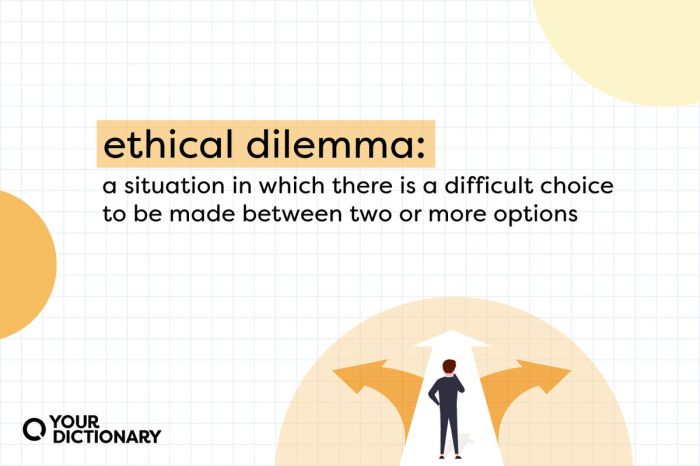
Ethical dilemmas are situations where individuals or organizations face difficult choices with no easy answers, often involving a conflict between personal or organizational interests and broader ethical considerations. Businesses of all sizes and across various industries grapple with these challenges daily.
- Data Privacy: A tech startup collects user data, but faces pressure to monetize this information, potentially violating privacy regulations and user trust.
- Whistleblower Protection: An employee discovers illegal accounting practices within their company. Reporting this could lead to job loss, but remaining silent would be ethically compromising.
- Environmental Responsibility: A manufacturing company must decide whether to invest in expensive, eco-friendly technology, even if it impacts short-term profits.
- Supply Chain Ethics: A clothing retailer discovers its supplier is using child labor. The retailer faces the dilemma of cutting ties, potentially impacting production and profits, or continuing the relationship.
- Marketing Practices: A pharmaceutical company needs to decide whether to aggressively market a new drug with potentially serious side effects, prioritizing profit over patient safety.
Real-World Case Studies of Unethical Business Practices
Numerous instances demonstrate the severe consequences of unethical behavior. The Enron scandal, for example, involved accounting fraud that ultimately led to the company’s collapse and significant financial losses for investors and employees. Similarly, Volkswagen’s “dieselgate” scandal, where the company cheated on emissions tests, resulted in substantial fines, legal battles, and irreparable damage to its reputation. These cases highlight the far-reaching impact unethical practices can have on stakeholders and the broader public.
Hypothetical Ethical Dilemma: A Pharmaceutical Company
Imagine a pharmaceutical company developing a life-saving drug. Clinical trials show remarkable success, but also reveal a rare, yet potentially fatal, side effect in a small percentage of patients. The company faces a difficult choice: release the drug, saving many lives but potentially risking the lives of a few, or delay the release to conduct further research, potentially delaying access to a life-saving medication for thousands.
This dilemma forces the company to weigh the potential benefits against the risks, considering ethical obligations to both patients and shareholders.
Ethical Considerations in Business Development
Developing a successful business requires a delicate balance between maximizing profits and upholding ethical standards. The pursuit of growth often presents dilemmas where seemingly advantageous actions might compromise ethical principles, potentially leading to long-term reputational damage and financial instability. This section explores the inherent tensions in business development and Artikels strategies for responsible growth.
Profit Maximization versus Ethical Considerations
The fundamental conflict in business development lies in the inherent tension between maximizing profits and adhering to ethical standards. While profit is essential for survival and growth, prioritizing it above all else can lead to unethical practices. For instance, cutting corners on product safety to reduce costs, engaging in exploitative labor practices to lower production expenses, or employing misleading marketing tactics to boost sales, all represent instances where profit maximization directly clashes with ethical considerations.
The long-term consequences of such actions can significantly outweigh any short-term gains, potentially resulting in legal repercussions, brand damage, and loss of consumer trust. A sustainable business model, however, recognizes the importance of ethical practices as a foundation for long-term success and positive stakeholder relationships.
Integrating Ethical Practices into Business Development Plans
Integrating ethical considerations into business development requires a proactive and systematic approach. This involves establishing a clear code of conduct, conducting regular ethical risk assessments, and implementing robust compliance mechanisms. A thorough due diligence process should be undertaken when selecting suppliers and partners, ensuring they align with the company’s ethical standards. Furthermore, regular training programs for employees on ethical decision-making and responsible business practices are crucial.
Transparency and accountability should be prioritized, fostering a culture where ethical concerns can be raised without fear of reprisal. Finally, the integration of ethical considerations should be reflected in key performance indicators (KPIs), demonstrating the commitment of the organization to sustainable and responsible growth.
Approaches to Responsible Business Growth
Different approaches exist for responsible business growth. One model emphasizes a triple bottom line approach, considering not only profit but also social and environmental impact. This approach prioritizes sustainability and stakeholder engagement, ensuring that business activities contribute positively to society and the environment. Another approach focuses on creating shared value, where business activities simultaneously address societal needs and generate economic value.
This could involve investing in local communities, promoting fair labor practices, or developing environmentally friendly products. Finally, some businesses adopt a stakeholder capitalism model, recognizing that a company’s success depends on the well-being of all its stakeholders, including employees, customers, suppliers, and the community. Each approach highlights the importance of integrating ethical considerations into the core business strategy, ensuring that growth is both profitable and responsible.
Checklist for Evaluating Ethical Implications
Before launching any new business development initiative, a thorough ethical assessment is vital. The following checklist can guide this process:
- Does the initiative comply with all relevant laws and regulations? This includes labor laws, environmental regulations, and consumer protection laws.
- Does the initiative respect the rights and dignity of all stakeholders? This includes employees, customers, suppliers, and the community.
- Does the initiative minimize environmental impact? This includes considering the use of resources, waste generation, and greenhouse gas emissions.
- Does the initiative promote fair competition? This includes avoiding anti-competitive practices such as price fixing or market manipulation.
- Does the initiative ensure transparency and accountability? This includes disclosing relevant information to stakeholders and being accountable for actions.
- Has a thorough risk assessment been conducted to identify potential ethical challenges? This involves considering both direct and indirect impacts.
- Are there mechanisms in place to address ethical concerns that may arise during implementation? This includes establishing clear reporting channels and processes for addressing complaints.
The Role of Business Ethics in Decision-Making
Business ethics play a crucial role in shaping a company’s strategic direction and operational practices. Integrating ethical considerations into decision-making processes not only fosters a positive corporate image but also mitigates risks, enhances long-term sustainability, and strengthens stakeholder relationships. A robust ethical framework provides a compass for navigating complex situations and ensuring responsible conduct.Ethical frameworks significantly influence strategic decision-making by providing a structured approach to evaluating options.
They offer a set of principles and guidelines that help companies analyze the potential ethical implications of their choices, considering their impact on various stakeholders, including employees, customers, suppliers, and the wider community. This systematic approach reduces the likelihood of unethical behavior and enhances the quality of decision-making.
Impact of Ethical Frameworks on Strategic Decision-Making
The adoption of ethical frameworks, such as utilitarianism (maximizing overall good), deontology (adhering to moral duties), or virtue ethics (focusing on character and integrity), directly impacts strategic planning. For example, a company committed to sustainability might prioritize environmentally friendly practices in its supply chain, even if it entails higher costs in the short term. This aligns with utilitarian principles of long-term benefit for the environment and society, outweighing immediate financial gains.
Conversely, a deontological approach might emphasize fair labor practices, irrespective of cost implications, upholding the moral duty to treat workers with respect and dignity.
Ethical Considerations in Resource Allocation, Hiring, and Marketing
Resource allocation decisions must consider ethical implications beyond mere profitability. Fair distribution of resources, ensuring equitable opportunities for all departments and employees, is vital. Similarly, hiring practices should prioritize meritocracy and diversity, avoiding bias and discrimination. Transparency and fairness in promotion processes further strengthen ethical conduct. Marketing strategies should be truthful and avoid manipulative tactics.
Ethical marketing avoids misleading advertising, protects consumer privacy, and respects cultural sensitivities. For instance, a company might choose to invest in employee training and development programs, even if it reduces short-term profits, reflecting a commitment to human capital development.
Comparative Analysis of Ethical Decision-Making Models
Several ethical decision-making models exist, each offering a unique perspective. Utilitarianism focuses on maximizing overall happiness and well-being. Deontology emphasizes adherence to moral rules and duties. Virtue ethics emphasizes character and moral virtues. Each model has its strengths and weaknesses.
Utilitarianism can sometimes justify actions that harm individuals for the greater good, while deontology can be inflexible in the face of conflicting duties. Virtue ethics, while focusing on character, may lack clear guidelines for specific situations. The choice of model depends on the specific context and organizational values. A company might blend elements from different models, creating a hybrid approach tailored to its specific needs and ethical priorities.
For example, a company might use a utilitarian approach for resource allocation while adopting a deontological approach for employee relations.
Influence of Ethical Considerations on Business Strategy Development
Ethical considerations are not merely add-ons to business strategies; they are integral components. A company’s commitment to ethical practices directly shapes its long-term strategic goals. For example, a company prioritizing environmental sustainability might develop a strategy focused on reducing its carbon footprint, investing in renewable energy sources, and promoting eco-friendly products. Similarly, a company emphasizing social responsibility might invest in community development programs or support charitable causes, enhancing its brand reputation and strengthening its relationship with stakeholders.
Ignoring ethical considerations can lead to reputational damage, legal liabilities, and ultimately, business failure. Integrating ethics into strategy fosters trust, builds a strong corporate culture, and ensures long-term viability.
Ethical Challenges in Specific Business Functions
Ethical considerations are not confined to overarching business strategies; they permeate every functional area. Understanding and addressing these challenges is crucial for maintaining a strong ethical culture and achieving long-term sustainability. This section will delve into specific business functions, highlighting prevalent ethical dilemmas and potential resolutions.
Ethical Dilemmas in Business Travel and Expenses
Business travel and expense reports often present opportunities for ethical lapses. Clear policies, robust oversight, and a commitment to transparency are essential to mitigate these risks. The following table illustrates common scenarios:
| Company Policy | Travel Type | Ethical Dilemma | Resolution |
|---|---|---|---|
| Strict per diem allowance for meals | International Conference | Inflating meal expenses on expense reports to cover personal dining. | Implement stricter expense reporting procedures, including mandatory receipts for all expenses above a certain threshold and random audits. Clearly communicate the consequences of fraudulent reporting. |
| Reimbursement for economy airfare | Domestic Business Trip | Upgrading to business class without prior authorization, claiming the expense as economy. | Establish a clear approval process for upgrades. Transparency regarding the cost difference between travel classes and the rationale for any upgrades should be provided. |
| Company car for business use only | Client Meeting | Using the company car for personal errands during a business trip. | Implement GPS tracking or mileage logs to monitor car usage. Reinforce the policy regarding personal use of company assets. |
| Detailed expense reporting required | Trade Show Attendance | Omitting certain expenses (e.g., small gifts to clients) from expense reports. | Provide clear guidelines on acceptable business expenses, including client entertainment. Regular training sessions can help clarify company policy. |
Ethical Issues Surrounding Business Loans and Financing
Securing business loans and financing involves navigating a complex landscape of ethical considerations. Transparency, honesty, and adherence to regulations are paramount. Potential ethical issues include:
Ethical considerations in business loans and financing are multifaceted and require careful navigation. Transparency and honesty are crucial to maintaining ethical standards.
- Misrepresenting financial information: Exaggerating revenue, minimizing debt, or concealing liabilities to obtain a loan.
- Failing to disclose relevant information: Omitting crucial details about the business’s financial health or potential risks.
- Using deceptive marketing tactics to attract investors: Making unsubstantiated claims about returns or future prospects.
- Prioritizing personal gain over business needs: Using loan funds for personal expenses rather than business development.
- Engaging in predatory lending practices: Charging exorbitant interest rates or imposing unfair terms on borrowers.
Ethical Implications of Various Business Coaching Methodologies
Business coaching methodologies, while aimed at improving performance, can raise ethical concerns if not implemented responsibly.
The ethical implications of business coaching extend beyond the specific techniques employed; they encompass the coach-client relationship and the overall impact on the business.
- Confidentiality breaches: Disclosing sensitive client information without consent.
- Conflicts of interest: Promoting personal products or services to clients without full disclosure.
- Unrealistic promises: Guaranteeing results that are not achievable.
- Lack of qualifications: Offering coaching services without the necessary expertise or experience.
- Coercion or undue influence: Pressuring clients into making decisions against their best interests.
Ethical Considerations in Developing and Implementing Different Business Models
The choice of business model significantly impacts a company’s ethical profile.
Developing and implementing a business model requires careful consideration of its ethical implications across various stakeholders. Transparency and fairness should guide the process.
- Sustainability: Considering the environmental and social impact of the business model.
- Fair labor practices: Ensuring fair wages, safe working conditions, and ethical treatment of employees.
- Data privacy: Protecting customer data and respecting their privacy.
- Transparency and accountability: Being open and honest about the business’s operations and practices.
- Community impact: Considering the positive and negative effects on the local community.
Building an Ethical Business Culture
Cultivating a strong ethical culture isn’t merely a matter of compliance; it’s the bedrock of a thriving and sustainable business. It fosters trust with stakeholders, attracts and retains top talent, and ultimately drives long-term success. A robust ethical framework isn’t a static document; it’s a living, breathing entity that requires consistent nurturing and adaptation.
Creating a Step-by-Step Ethical Code of Conduct
Establishing a comprehensive ethical code of conduct requires a methodical approach. The process should involve key stakeholders, ensuring buy-in and understanding across all levels of the organization. This collaborative approach fosters ownership and commitment to the code. A well-defined code should be clear, concise, and easily accessible to all employees. It should address common ethical dilemmas within the industry and the specific context of the organization.
- Define Core Values: Identify the fundamental principles that will guide the company’s actions and decisions. These values should be explicitly stated and consistently reinforced.
- Develop Specific Guidelines: Translate the core values into concrete guidelines covering areas such as conflict of interest, data privacy, workplace safety, and environmental responsibility.
- Establish Reporting Mechanisms: Create clear and accessible channels for reporting ethical violations, ensuring confidentiality and protection against retaliation.
- Implement Regular Reviews: The ethical code should be reviewed and updated periodically to reflect changes in the business environment, legal landscape, and company priorities.
- Ensure Enforcement: Consequences for violations of the code must be clearly defined and consistently applied, fostering accountability.
Fostering Open Communication and Accountability
Open communication is paramount to creating an ethical environment. Employees must feel comfortable raising concerns without fear of retribution. This requires establishing trust and a culture of psychological safety. Accountability mechanisms ensure that ethical breaches are addressed promptly and effectively.
- Anonymous Reporting Systems: Implementing anonymous reporting systems allows employees to voice concerns without fear of identification.
- Regular Ethical Audits: Conducting regular ethical audits helps identify potential weaknesses in the company’s ethical framework and compliance efforts.
- Transparent Decision-Making: Openly communicating the rationale behind ethical decisions builds trust and fosters understanding among employees.
- Leadership Commitment: Visible and consistent commitment from leadership is crucial in demonstrating the importance of ethical conduct.
Developing an Ethical Dilemma Training Program
A comprehensive training program equips employees with the knowledge and skills to navigate ethical dilemmas effectively. This program should go beyond simple compliance training, focusing on critical thinking and ethical decision-making frameworks. Real-life scenarios and case studies can effectively illustrate the complexities of ethical choices.
The training should include interactive modules, role-playing exercises, and opportunities for discussion and feedback. Regular refresher training should be provided to reinforce learning and address evolving ethical challenges.
Building a Culture of Ethical Leadership and Decision-Making
Ethical leadership sets the tone for the entire organization. Leaders must model ethical behavior, consistently communicate ethical expectations, and hold themselves and others accountable to the highest ethical standards. This requires fostering a culture of integrity, transparency, and fairness.
Leaders should actively promote ethical decision-making by providing resources, training, and support to employees. They should create an environment where ethical considerations are integrated into all aspects of the business, from strategic planning to daily operations. Regular ethical reflection and discussion within leadership teams are crucial to maintain a strong ethical compass.
The Impact of External Factors on Business Ethics
Business ethics aren’t solely determined by internal policies; they are significantly shaped by a complex interplay of external forces. Societal expectations, legal frameworks, global trends, and stakeholder pressures all contribute to defining what constitutes ethical conduct within a business environment. Understanding these external influences is crucial for businesses aiming to operate responsibly and sustainably.Societal values and legal regulations form a fundamental backdrop against which businesses operate.
These external factors often dictate the minimum acceptable standards of ethical behavior, setting the baseline for responsible business practices.
Societal Values and Legal Regulations
Societal values, reflecting the prevailing moral and cultural norms of a community, significantly influence what is considered ethical within a business context. For instance, a society prioritizing environmental protection will likely demand higher environmental standards from businesses operating within its borders. Similarly, a society that values fair labor practices will expect businesses to adhere to ethical employment standards, such as fair wages and safe working conditions.
Legal regulations, on the other hand, provide a legally enforceable framework for ethical business conduct. Laws related to consumer protection, environmental regulations, and anti-corruption measures establish minimum standards that businesses must meet to avoid legal penalties. The interplay between societal values and legal regulations creates a dynamic environment where ethical expectations are constantly evolving. A company that lags behind these evolving standards risks reputational damage and legal repercussions.
For example, the growing societal concern for data privacy has led to the implementation of stricter data protection laws, like GDPR in Europe, forcing businesses to adapt their data handling practices.
Globalization and International Business Practices
Globalization has introduced complexities to ethical considerations in business. Operating across national borders exposes businesses to diverse ethical norms and legal frameworks. What might be considered ethical in one country could be unethical in another, creating challenges for multinational corporations striving for consistency in their ethical standards. For example, bribery, while illegal in many Western countries, might be an accepted practice in some other parts of the world.
Navigating these differences requires a nuanced understanding of local contexts and the development of robust ethical guidelines that transcend national boundaries. Furthermore, globalization fosters competition, potentially leading businesses to cut corners on ethical practices to gain a competitive edge. This underscores the need for international cooperation and the development of globally accepted ethical standards to ensure fair competition and prevent a race to the bottom.
Stakeholder Influence on Ethical Behavior
Businesses are not isolated entities; they operate within a broader ecosystem of stakeholders whose interests and expectations significantly influence ethical behavior. Customers, employees, investors, and the community all play a vital role in shaping a company’s ethical trajectory. Customers increasingly demand ethical and sustainable products and services, influencing businesses to adopt environmentally friendly practices and transparent supply chains. Employees expect fair treatment, safe working conditions, and opportunities for professional development.
Investors are increasingly scrutinizing a company’s environmental, social, and governance (ESG) performance, integrating ethical considerations into their investment decisions. The community expects businesses to contribute positively to local economies and the environment, acting as responsible corporate citizens. Ignoring these stakeholder concerns can lead to boycotts, employee turnover, reduced investment, and damage to a company’s reputation. For instance, companies facing accusations of unethical labor practices often suffer significant reputational damage and financial losses.
Environmental Sustainability and Business Ethics
Environmental sustainability is increasingly becoming a central component of business ethics. The growing awareness of climate change and resource depletion has placed pressure on businesses to minimize their environmental footprint and adopt sustainable practices. This includes reducing carbon emissions, conserving resources, minimizing waste, and promoting biodiversity. Businesses are increasingly integrating sustainability into their core strategies, recognizing that environmental responsibility is not just a matter of ethical conduct but also a crucial factor for long-term business success.
Companies that fail to address environmental concerns risk facing penalties, consumer backlash, and damage to their brand image. For example, companies involved in deforestation or polluting activities often face intense public criticism and legal challenges.
Ultimately, navigating ethical dilemmas in business requires a commitment to integrity, transparency, and a proactive approach to identifying and addressing potential conflicts. By fostering a culture of ethical leadership, open communication, and accountability, companies can not only mitigate risks but also build trust with stakeholders, enhance their reputation, and achieve long-term sustainability. The journey towards ethical business practices is ongoing, demanding constant vigilance and a willingness to adapt to evolving societal expectations and legal frameworks.
The exploration of these dilemmas should serve as a catalyst for continuous improvement and a commitment to responsible business conduct.
FAQs
What are some common signs of unethical behavior in a business?
Common signs include a lack of transparency, inconsistent application of rules, disregard for legal compliance, prioritizing profits over employee well-being, and a culture of silence around ethical concerns.
How can whistleblowing be encouraged in a company?
Establish clear and accessible reporting channels, guarantee anonymity and protection for whistleblowers, and promote a culture where reporting ethical violations is seen as a responsible act rather than a betrayal.
What is the role of a company’s board of directors in ensuring ethical conduct?
The board plays a crucial oversight role, setting the ethical tone, approving codes of conduct, monitoring compliance, and holding management accountable for ethical breaches.


